Travelogue – Sri Lanka- A Paradise
International Tourist from India normally try to explore places in Europe, North America, Australia, NewZealand, Africa, nearby Middle East countries but miss on immediate neighbour, especially tourist friendly Sri Lanka. Probably alternatives in Southeast Asia (Thailand, Vietnam, Indonesia) that offer similar cultural and natural experiences with possibly more stable infrastructure and stronger tourism marketing campaigns.
We decided to explore parts of Sri Lanka during our recent visit. Sri Lanka is a small island with a big heart—and stunning natural beauty. Despite its size, the country offers a rich variety of landscapes, ecosystems, and cultural experiences, making it a paradise for nature lovers and adventure travellers.
Sri Lanka, an island nation in the Indian Ocean, boasts a rich and diverse history spanning over 2,500 years. Known in ancient times as Lanka and later Ceylon, it has been a center of Buddhist scholarship and Sinhalese civilization since the 3rd century BCE. The country was home to powerful ancient kingdoms like Anuradhapura and Polonnaruwa, which left behind impressive ruins and stupas. Gaining independence from British colonial rule in 1948, Sri Lanka today is a vibrant Republic known for its natural beauty, spiritual heritage, and cultural diversity.
Sri Lanka offers Pristine beaches and stretches of golden sands, cool & misty highlands around Nuwara Eliya, Ella, and Haputale offering lush green hills, waterfalls, and tea estates, UNESCO World Heritage virgin rainforests in the world, train ride from Kandy to Ella in the hills, Cultural heritage in natural settings like Sigiriya Rock Fortress, Dambulla Cave Temple, Anuradhapura & Polonnaruwa, Lakes & Lagoons, and many architectural marvels.
We reached Colombo, the Capital of Sri Lanka by Air India Flight. After checking in the Hotel, it was time to explore the city. However, before that, watching the ocean from its restaurant over a cup of tea was magical.
Colombo
Colombo, the commercial capital and largest city of Sri Lanka, is often the first stop for travellers arriving in the country. Colombo offers a vibrant mix of colonial arm, modern city life, cultural sites, shopping, and coastal views—making it worth at least two days in any itinerary. There are many beautiful tourist places in Colombo to explore.


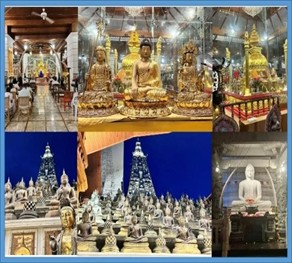
Gangaramaya Temple
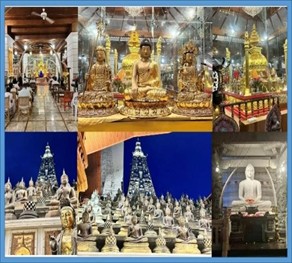
Gangaramaya Temple is one of the most significant and iconic Buddhist temples in Colombo, Sri Lanka. Located near Beira Lake, it blends traditional Sri Lankan, Thai, Indian, and Chinese architecture. The temple serves as a place of worship, a center for learning, and a museum that houses a vast collection of artifacts, including Buddha statues from around the world. Founded in the late 19th century by Venerable Hikkaduwe Sri Sumangala Nayaka Thera, Gangaramay
plays an important role in Sri Lankan Buddhist culture and hosts the annual Navam Perahera, a grand religious procession
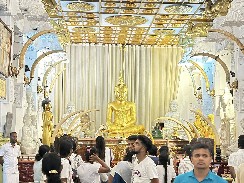
Some Glimpses of Gangaramaya Temple.
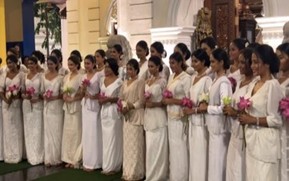
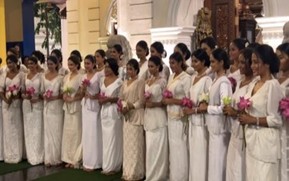
During our visit, we saw that just outside the temple with temple as a background, shoot for Miss teen Sri Lanka was going on. We could click the picture of the beautiful participants
Biera Lake
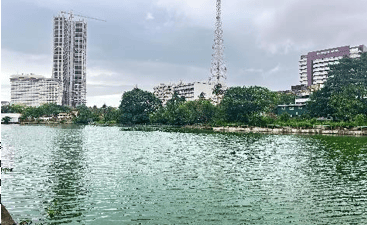
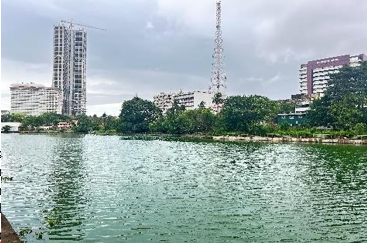
Beira Lake is a historic and scenic urban lake located in the heart of Colombo, Sri Lanka.
Spanning approximately 160 acres, it serves as a tranquil oasis amidst the bustling city, offering both locals and visitors a serene escape. Originally constructed by the Portuguese in the early 16th century, Beira Lake was designed as a defensive moat to protect Colombo from invaders. The Portuguese connected a natural stream to the marshy land surrounding the fort, creating a large water body. Over time, the lake's area was expanded by the Dutch
and later the British, who removed crocodiles and developed the surrounding area for recreational activities such as rowing and yachting. In the 19th century, land reclamation began, reducing the lake's size. The Lake in day time is beholding. One can walk around the lake for hours together.
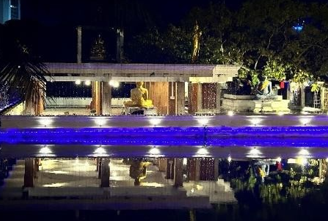
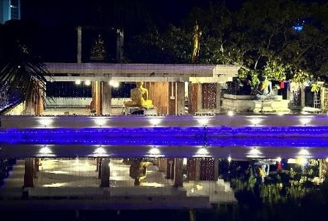
Gangaramaya Temple is on the lake's edge. Renowned architect Geoffrey Bawa designed Seema Malaka Temple in 1976. This temple is built on three platforms over the water and serves as a Centre for meditation and rest. It is part of the Gangaramaya Temple complex.
Lotus Tower
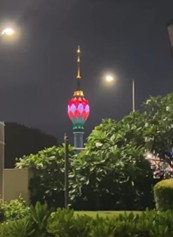
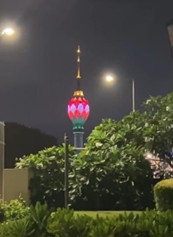
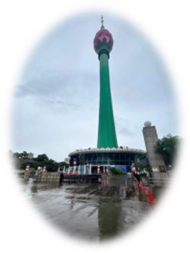
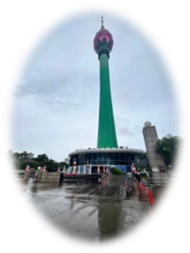
The Colombo Lotus Tower, locally known as Nelum Kuluna, is Sri Lanka’s tallest and South Asia’s highest self-supported structure, standing at 356 meters
(1,168 feet). Completed in 2019 and opened to the public in 2022, this iconic lotus-shaped tower symbolizes the nation's blend of tradition and modernity. It has an Observation Deck at 244 meters offering 360° panoramic views of Colombo,
Beira Lake, and the Indian Ocean. It has the only Revolving Restaurant of Sri Lanka situated on the 26th floor, Cosmic Banquet Hall, Telecommunication Museum, Exhibition Hall and in the evenings, the tower illuminates with a
captivating light and sound display.
It was a rainy day and despite waiting for about an hour, we didn’t get the tickets for observation deck; as the tickets were not being sold.
We were told by the reception that the observation deck opens in the sky and it is risky to visit the deck on rainy days. So, we just took pictures at Lotus Tower and returned back a bit dejected (May be in next visit).
Bar of Galle Face Hotel
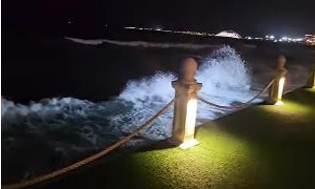
If you are not staying here, it is a good idea to spend at least one evening at open Bar of Galle Face Hotel. Sri Lanka’s iconic landmark, The Galle Face Hotel, is situated in the heart of Colombo, along the seafront and facing the famous Galle Face Green. One of the oldest hotels, The Galle Face Hotel embraces its rich history and legendary traditions that resonate with old and new generations of travellers alike.
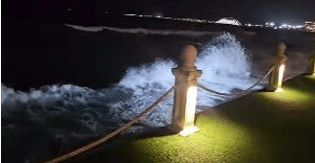
The waves hammering the sea wall like thunderous applause, as we enjoyed the passion fruit based fresh drink along with snacks, while appreciating the live music.
Local Train Journey
Riding a local train along the coastal line in Colombo is an unforgettable experience, especially when shared with the locals. The train hugs the edge of the Indian Ocean, offering stunning, uninterrupted views of the turquoise waves crashing against sands and stones just feet away from the tracks.
The sea breeze flows freely through the open windows, blending with the gossip of daily
commuters. Started journey from Wellawatte railway station to Panadura in a local for about 45 minutes then return from Panadura to Fort Colombo Railway Station. The return journey towards Fort Station was awesome as it felt sometimes that the waves would just dash you.
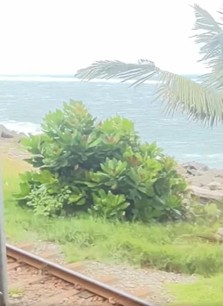
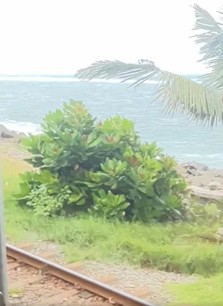
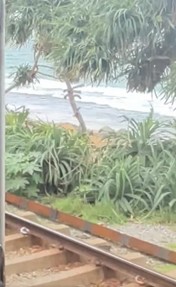
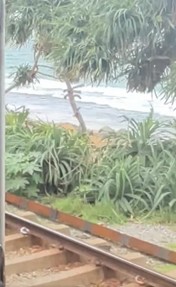
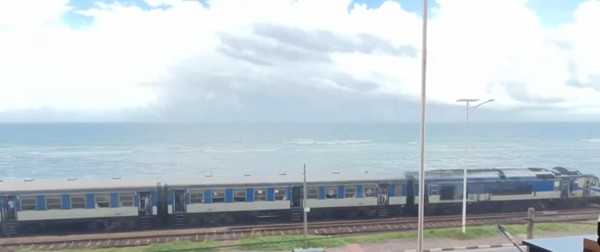
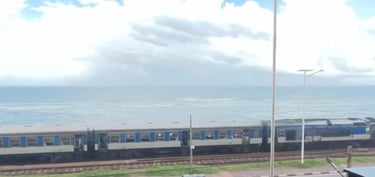
Who would not love to travel in this train over and over again, kissing the shore on one side and entrancing ocean on the other?
Colombo National Museum
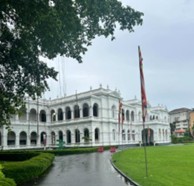
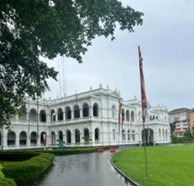
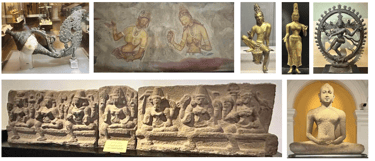
Next day we visited Colombo National Museum in the afternoon. The Colombo National
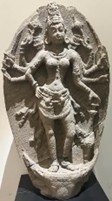
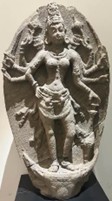
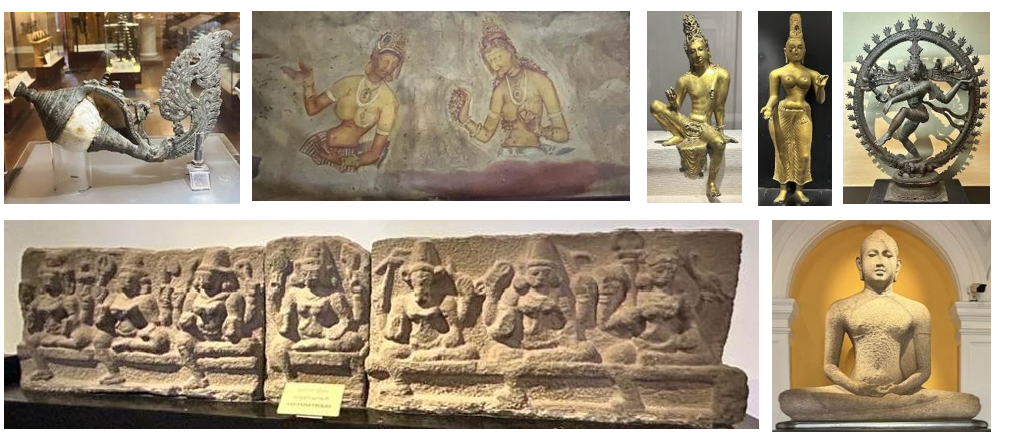
Museum, established in 1877, is Sri Lanka’s largest museum. Located in Colombo, it houses a rich collection of artefacts, including royal regalia, ancient sculptures like the Toluvila Buddha, and cultural items from Sri Lanka’s diverse history. It also features a library with rare manuscripts and an adjoining Natural History Museum. Some glimpses from
inside the museum:
Colombo Streets
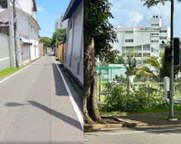
Colombo is one of the cleanest cities in Sri Lanka. The streets are well-maintained, with regular
waste collection and neatly organized public spaces. Beautiful parks, tree-lined roads, and modern
infrastructure add to the city’s charm. Efforts by the local authorities and community help keep Colombo clean and attractive for both residents and visitors. In cleanliness, the city may give
run for the money to many European and North American streets. Today visited University area, Olympic village, passed from the front of Ministry of Sports and Youth Affairs, Theatre. Schools and Colleges in scorching Sun. After walking about 4 kms came back to rest for two hrs and prepare to move on to next city.
Colombo, Sri Lanka's bustling capital, presents a fascinating and often challenging landscape when it comes to roads and traffic. The city's road network, while generally well-maintained in its main arteries, can quickly narrow into congested lanes within residential and commercial hubs. During peak hours, particularly in the mornings and evenings, traffic slows down in many areas with long queues of cars, tuk-tuks (auto-rickshaws), motorcycles, and buses vying for space. Drivers often exhibit patience with hardly any honking. One can easily get Uber (Cabs & Auto) as well as Kangaroo Cabs (On advance bookings). There is also Pick Me app, which can be used for quick hiring of tuk tuks and cabs. Tuk-Tuk (Auto) is very easily available at all streets, but one may need to negotiate the fare. I observed that the car drivers in Sri Lanka drive carefully, mostly in lane, giving proper signals, there are many one ways to avoid congestions and Traffic Police is active in facilitating ease of traffic as well as penalising those who break rules. We saw few minor accidents too, however mostly drivers follow rules, take care of pedestrians crossing the roads at zebra crossings either by slowing down or by stopping. Due to narrow highways, traffic speed remains slow, though one will find that on hills the speed limits for four wheelers goes upto 70KMPH. The roads all across Sri Lanka are mostly in very good conditions and smooth.
Mas Athena
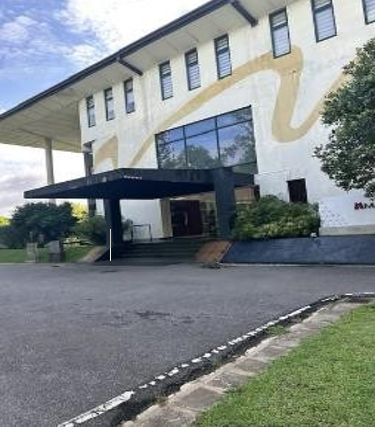
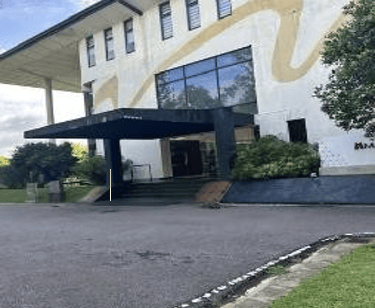
We got the opportunity ro visit MAS Athena, Learning Centre with a difference. Nestled within the verdant expanse of MAS Fabric Park in Thulhiriya, MAS Athena stands as a beacon of sustainable learning and development. Established in 2007 by MAS Holdings, it offers a harmonious blend of modern educational facilities and eco-conscious infrastructure, fostering both professional growth and environmental stewardship.
A Serene and Sustainable Setting
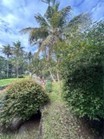
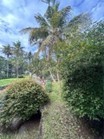
MAS Athena is enveloped by the lush landscapes of MAS Fabric Park, a 165-acre privately owned apparel-intensive free trade zone. The park is home to “Thuruwadula,” a 10-acre analog forest that serves as a sanctuary for biodiversity, featuring endangered endemic plant species and various fauna. This green initiative underscores the commitment to environmental conservation and provides a tranquil backdrop for learning


State-of-the-Art Infrastructure
The facilities at MAS Athena are designed to cater to a wide range of corporate and educational needs:
• Training and Conference Facilities: Equipped with modern classrooms and a 500+ seat auditorium, suitable for workshops, seminars, and large-scale events.
• Accommodation and Dining: On-site chalets and villas provide comfortable lodging, complemented by dining facilities and a franchised café.
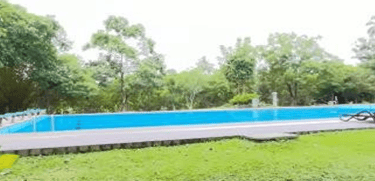
• Recreational Amenities: A gym, Olympic-sized swimming pool, and sports grounds for basketball, cricket, and volleyball promote wellness and team-building.
• Sustainable Utilities: The park features
centralized water treatment and distribution facilities meeting WHO standards, a medium voltage power distribution system, and Sri Lanka’s largest combined effluent treatment plant.
• Renewable Energy: MAS Fabric Park hosts the largest multi-site roof-mounted solar generator in Sri Lanka, with 19 installations totaling 23MW, including a 4.2MW installation on a single 10-acre roof.
Programs and Collaborations
MAS Athena offers a diverse array of programs aimed at enhancing professional competencies:
• Leadership Development: Initiatives include coaching for senior leaders, building high- performance teams, and strategic alignment workshops.
• Educational Courses: Certificate courses in Business Administration and Human Resource Management are available, developed in collaboration with MAS Education.
• Institutional Partnerships: Collaborations with institutions like General Sir John Kotelawala Defence University (KDU) offer specialized programs such as the Management Application Learning (MAL) program, focusing on energy and water resource management.
Commitment to Sustainability
MAS Athena’s integration within MAS Fabric Park reflects a broader commitment to sustainable industrial transformation. Innovative practices such as converting textile waste into eco-bricks for construction and producing certified compost fertilizer at a commercial scale exemplify this dedication.
The staff at MAS-Athena is very helpful and courteous. Even the Chef and waiters in the dining hall came to know that I am a vegetarian, having worked in UAE, the chef on the last day made specific Indian dishes for me to relish.
Sygiria
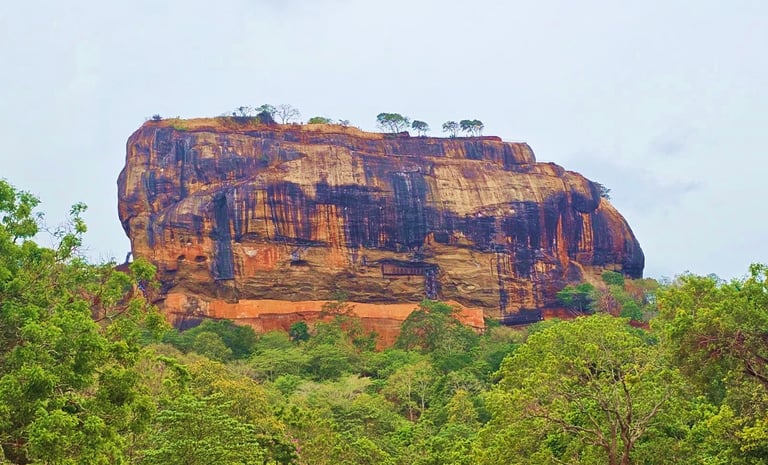
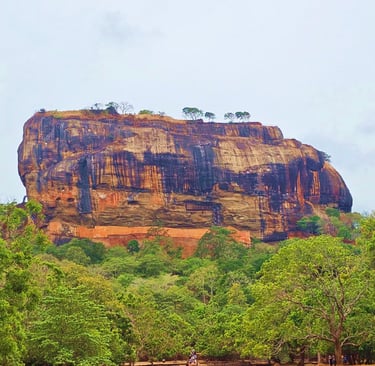
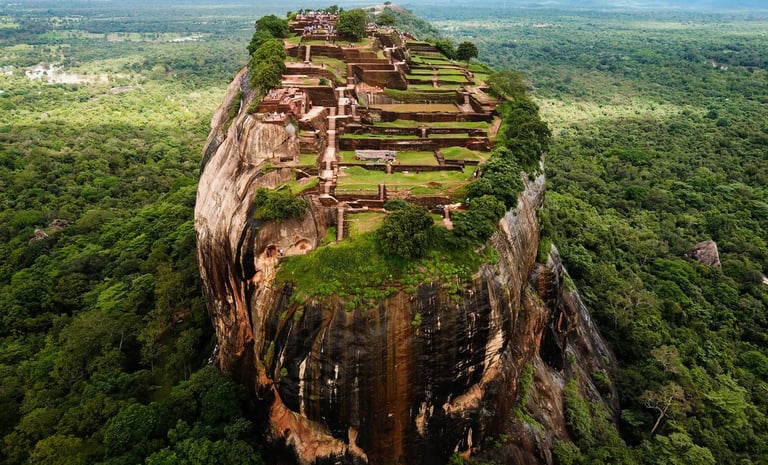
While we stayed at MAS-Athena, I hired a cab the next day and ventured for Sygiria and Dambulla. According to Sri Lankan legends rooted in the Ramayana, Sigiriya is believed by some to have originally been a grand fortress or palace built by King Ravana, the mighty ruler of Lanka.
Rising dramatically from the jungle, this massive rock formation is said to have housed
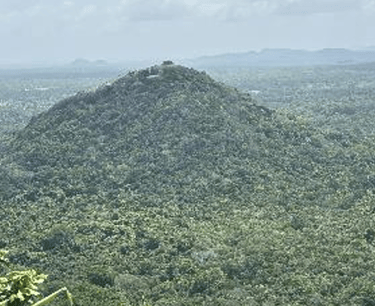
Ravana’s palace, offering both protection and a commanding view of the surrounding region. In front of Sigiriya lies a smaller hill known as
Wariyapola, which, according to folklore, is the place where
Hanuman first landed when he came to Lanka in search of Sita. The name “Wariyapola” roughly translates to “place of aircraft landing” in Sinhala, aligning with myths about Hanuman’s leap across the ocean and Ravana’s use of flying machines. Sigiriya is an ancient rock fortress and palace complex in central Sri Lanka.
It is said that Sygiriya Rock Palace was built by King Kashyapa I (477–495 CE), it’s known for its striking frescoes, water gardens, and the iconic Lion’s Gate. Sigiriya is a UNESCO World Heritage Site and one of Sri Lanka’s most famous historical landmarks.
Some Sri Lankan legends and alternative historical theories suggest that Sigiriya may have originally been one of Ravana’s palaces or strongholds, later repurposed by King Kashyapa. Ravana is said to have had several palaces and airstrips (like the mythical Dandu Monara, or “flying peacock”) around Sri Lanka, and Sigiriya’s unique structure fits the narrative for such ancient architecture.
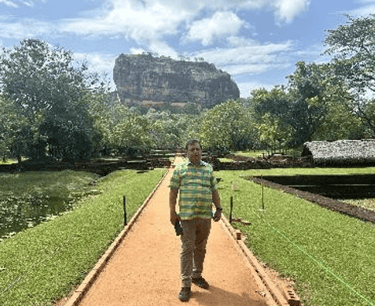
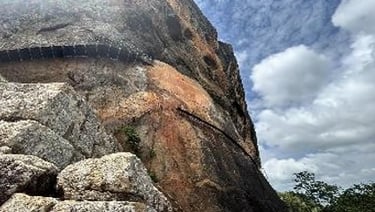
I was fortunate to visit Sygiriya and climbed the rock through the path which is scary at times as one can see more than 100 metres directly through the iron stairs. Then while climbing vertically on round iron
stairs from outside the rock to see the murals, it takes a breath for a while. But, once you reach the summit, the view all around is awesome. One wonders, how the King, Queen, his courtiers, soldiers, ordinary people would daily climb up and down from this Rock Palace of about 150 M height. Surely, the place is was worth visiting.
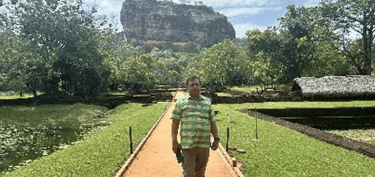
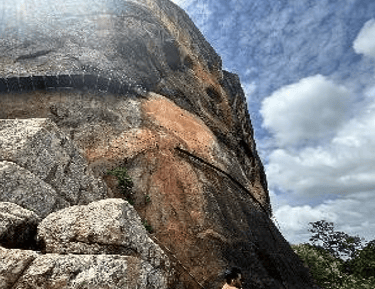
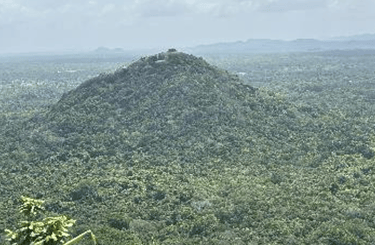
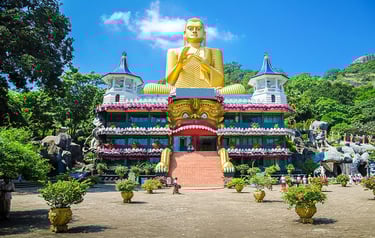
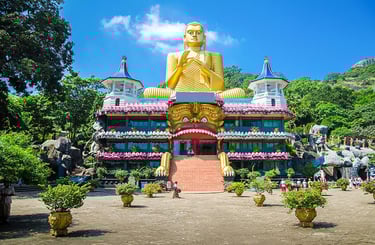
After visiting Sygiriya Rock Palace, on return journey, I had the opportunity to visit the Dambulla Cave Temple, also known as the Golden Temple of Dambulla, which is a UNESCO World Heritage Site located in central Sri Lanka. This remarkable complex of rock temples dates
back to the 1st century BCE and is renowned for its stunning preservation and historical significance.
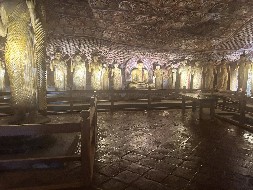
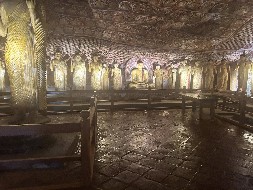
Beneath a vast overhanging rock, the temple consists of five major caves filled with intricate murals and over 150 statues, primarily of the Buddha. These sacred spaces have served as places of worship for over two millennia, showcasing the evolution of Sinhalese Buddhist art and architecture. Surrounded by
panoramic views of the countryside, the Dambulla Cave Temple remains a
vital pilgrimage site and a testament to Sri Lanka’s rich cultural and religious heritage. To honour the Holy shrine, I took only one picture inside and rest are from outside.
Bentota, Hikkaduwa and Galle
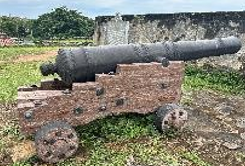
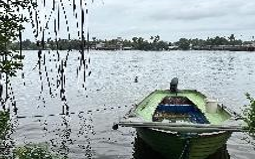
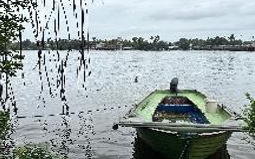
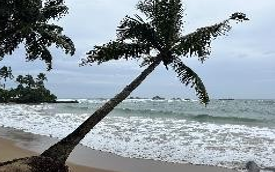
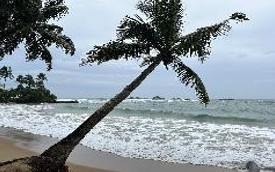
Initially we decided to stay at Bentota or Galle and see Hikkaduwa on the way. Later analysing the weather conditions, we decided to keep Colombo as base and go to Galle and while coming back see Hikkaduwa and Bentota on the way to Colombo and make a trip to Negambonext day from Colombo itself.
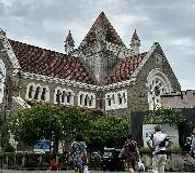
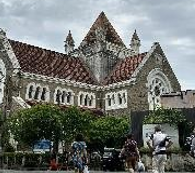
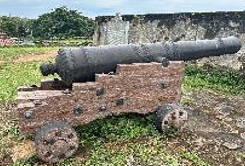
Bentota, Hikkaduwa, and Galle are three of Sri Lanka’s most popular coastal destinations, each offering a unique blend of natural beauty, history, and culture. Bentota is known for its tranquil beaches, luxury resorts, and the scenic Bentota River, ideal for boat safaris and water sports. Hikkaduwa, a short drive away, is famous for its vibrant coral reefs, surfing waves, and laid-back beach vibe, attracting both snorkelers and party-goers. Further south lies Galle, a historic city centered around the Galle Fort, a UNESCO World Heritage Site built by the Portuguese and fortified by the Dutch. The cobblestone streets, colonial architecture, boutique shops, and seaside views make Galle a captivating blend of the past and present. Together, these towns create a diverse and unforgettable coastal experience in southern Sri Lanka.
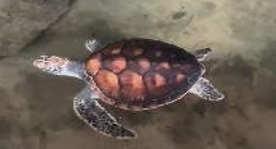
It is recommended that one must stay for one night in Bentotota and one night in Negambo to enjoy the Beaches, Lagoons, visit Churches, Temples and parks, go for boating in the lagoon and river, visit turtle
hatcheries, enjoy fishing and visit Dutch town in Galle.However, we completed almost all the site seeing activities (except boating as weather was not good) in the single day, but it became a bit hectic as we travelled about 250 Kms (To & Fro).
Negambo
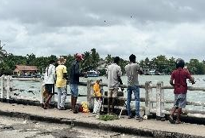
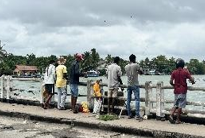
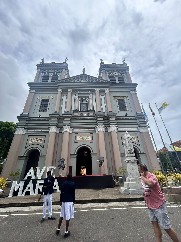
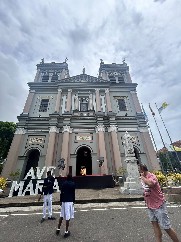
Next day we started at around 9.00 AM for Negambo. Negombo is a bustling coastal city located just north of Colombo and close to Sri Lanka’s main international airport, making it a convenient first or last stop for travellers. Known for its long sandy beaches and vibrant fishing industry, Negombo offers a mix of local culture and relaxed seaside charm. The city’s Dutch colonial past is still evident in its historic canal system and old churches, such as the impressive St. Mary’s Church, where we met Father Anthony and many schoolchildren.
The Negombo Lagoon is a highlight, home to rich birdlife and traditional catamaran fishing boats. With its lively markets, seafood restaurants, and friendly atmosphere, Negombo provides an authentic glimpse into everyday Sri Lankan coastal life.
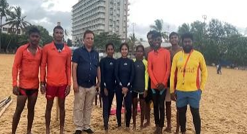
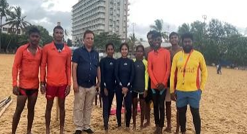
(Pic with Life Guards at Brown Beach, Negambo.)
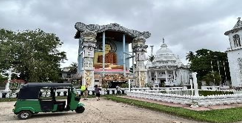
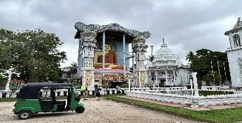
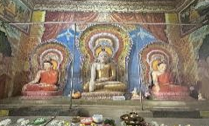
Angurukaramulla Temple is a prominent Buddhist temple located in Negombo, Sri Lanka, known for its vibrant murals and impressive architecture. A key attraction is the giant seated Buddha statue at the entrance, which leads
visitors through the mouth of a dragon-like creature—a symbolic gesture of leaving behind evil. Inside, the temple features intricate wall paintings and sculptures that depict scenes from Buddhist mythology and Sri Lankan history. A peaceful and culturally rich site offers insight into the island’s religious traditions.
We covered most of the places at Negambo in whole day and were back to Colombo city late in evening covering about 130 kms in a day. However, it is a good idea to spend at least one day at some nice beach resort.
Nuwera Eliya
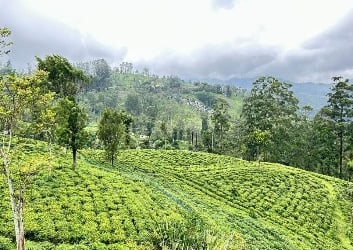
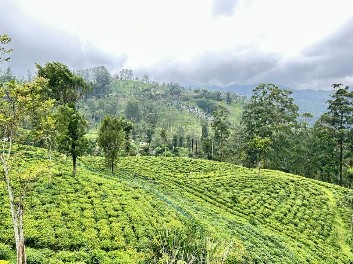
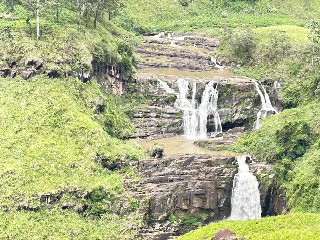
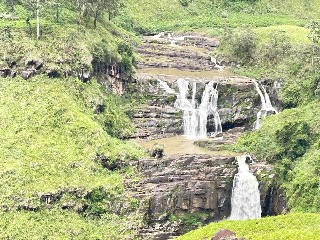
Burrowed in the cool highlands of Sri Lanka, Nuwara Eliya is renowned for its verdant tea estates. One can take a train to reach Nuwera Eliya, Kandy and Ella, but since we had limited time so hired a cab for few days to cover Nuwara Eliya and Kandy. The journey from Colombo to Nuwara Eliya is a breathtaking adventure through the heart of Sri Lanka’s hill country, unfolding like a scenic painting at every turn. As the road winds upward from the coastal plains into the central highlands, the landscape transforms dramatically—dense tropical forests give way to misty mountains and rolling hills blanketed with lush green tea estates that stretch as far as the eye can see. The cool air is filled with the earthy scent of tealeaves and the distant roar of cascading waterfalls. Along the way, majestic falls like St. Clair’s and Devon plunge gracefully down rugged cliffs, their silvery streams weaving through the greenery like ribbons of light. The roadside is dotted with quaint villages and smiling tea pluckers in colorful saris, adding charm to the already enchanting route. It’s a journey not just through changing altitudes, but through layers of natural beauty and serenity that leave a lasting impression on the soul. Nuwara Eliya is a must visit place in Sri Lanka.
Pedro Tea Estate stands out as a historic and picturesque destination. Established in 1885, Pedro Tea Estate is located approximately 3.5 kilometers east of Nuwara Eliya town, at an elevation of about 1,800 meters above sea level, providing ideal conditions for cultivating high-quality Ceylon tea. The estate offers guided tours of its factory, where visitors can observe the traditional processes of tea production, including plucking, withering, rolling, fermenting, drying, and grading. (No CTC, only orthodox tea with extremely rich flavour). Notably, the factory operates at night to preserve the delicate flavors of the tea, so daytime visitors may not witness the machinery in action. After the tour, guests can enjoy freshly brewed tea at the Lovers Leap Ethical Tea Boutique, which overlooks the lush plantations and the nearby Bomburu Ella reservoir. The estate is also committed to sustainable practices, supporting local communities and promoting eco-friendly farming methods. A visit to Pedro Tea Estate offers not only insight into Sri Lanka’s rich tea heritage but also an opportunity to experience the serene beauty of its hill country.
Seetha Amman Temple
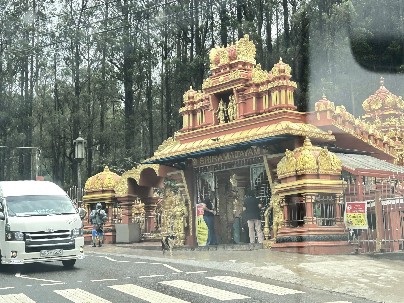
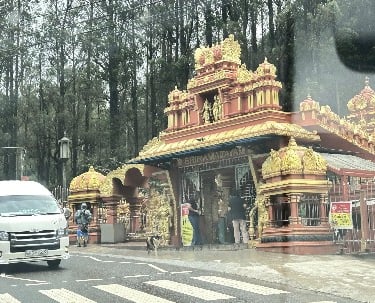
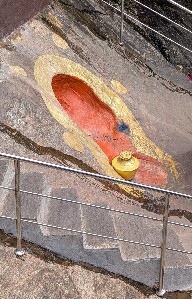
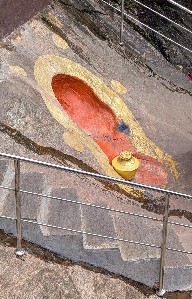
Located about 5 km southeast of Nuwara Eliya town along the A5 highway, the Seetha Amman Temple, is believed to be the only temple in the world dedicated exclusively to Princess Sita. It stands on the site where, according to legend, Sita was held captive by King Ravana after her abduction. The temple is situated beside a stream, thought to be the one where Sita bathed and prayed daily for her rescue. Visitors can observe circular depressions on the rock face across the stream, believed to be the footprints of Hanuman, who met Sita here and delivered Rama’s ring as a sign of hope. The temple features South Indian architectural elements and houses statues of Lord Rama, Sita, Lakshmana, and Hanuman. The temple is maintained by the Indian Tamil community in Sri Lanka and is a popular pilgrimage site, especially during festivals like Rama Navami.
Adjacent to the Seetha Amman Temple lies the Hakgala Botanical Garden, believed to be the site of the mythical Ashok Vatika. According to the Ramayana, Ravana created this lush garden to persuade Sita to stay in Lanka. Sita, however, chose to remain under a tree in this grove, awaiting Rama’s rescue.
Established in 1861, the Hakgala Botanical Garden is the second-largest in Sri Lanka and boasts over 10,000 species of flora, including a variety of orchids and roses. The garden is a popular tourist attraction, drawing visitors who are interested in both its botanical offerings and its mythological significance. His Holiness Sri Sri Ravishankarji visited the temple on 19th May 2024. There is a plaque in his honour. I feel the grace to be able to visit the temple and see the swayambhoo murti and paws impressions of Hanuman.
Due to paucity of time, we tried to get a ride on the train for couple of stations from Nuwara Eliya to Ella, which is supposed to be one of the best train journeys of the world in hilly terrain. However, due to heavy rains trains were delayed and we had to miss the journey. (May be some other time).
Thought on lives of Tea Estate Workers
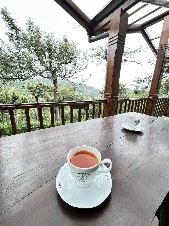
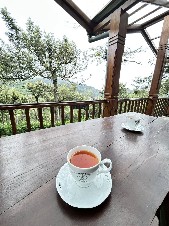
While sipping tastefully the best tea of the world at Pedro Tea Estate and appreciating the verdant tea gardens, I was thinking of the poor women workers who pluck the tea leaves daily to bring fresh aroma in our lives. They work incessantly for 8 hours in heat, humidity, rains, tough terrains, risking snake and insect bites, limited or no access to ease themselves and bruising themselves due to thick vegetation. I did some research which brings out some truth.
Tea plantation workers in Sri Lanka, continue to face significant socio-economic challenges despite their vital role in the country’s tea industry. As of May 2024, the government mandated an increase in the daily wage from LKR 1,000 to LKR 1,700 (approximately $5.66) to alleviate poverty exacerbated by the nation’s economic crisis. However, plantation companies have resisted this change, citing a 45% rise in production costs and potential threats to the industry’s global competitiveness.
Source: June 12, 2024 07:15 am IST - COLOMBO; Meera Srinivasan; thehindu.com
Despite the wage hike, many workers struggle to meet their basic needs. A study estimated that a tea estate worker’s family of four requires a daily income of LKR 2,321 (around ₹639) to maintain a decent standard of living, highlighting a significant gap between earnings and living costs.
Source: https://borgenproject.org/tea-plantation-workers-in-sri...
Working conditions remain arduous. Tea pluckers are often required to harvest at least 18 kilograms of leaves daily to earn their wages, leading to physical strain. A study reported that 68.5% of tea pluckers experienced musculoskeletal pain, with 43.4% suffering from lower back pain.
Source: https://journals.sagepub.com, Research article, First published online October 14, 2020
Living conditions are equally challenging. Many workers reside in overcrowded “line rooms” lacking proper sanitation, ventilation, and access to clean water. These inadequate living conditions contribute to health issues, including high rates of maternal and infant mortality.
Source: The tempest in your tea cup, 21/8/2018 ; Sri Lanka Brief ; seven year old article)
Education and healthcare access are limited. Approximately 47.8% of estate household heads have only five years of schooling, and 12.2% have no education. Healthcare services are often inaccessible, leading to poor health outcomes among workers.
Source: https://www.lankaweb.com/.../contract-farming-could-save...
The combination of low wages, demanding work conditions, inadequate living standards, and limited access to essential services underscores the systemic challenges faced by tea plantation workers. Addressing these issues requires comprehensive reforms and sustained efforts to improve the livelihoods and well-being of this community. I was discerning, similar would be the case for India too.
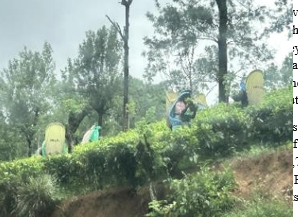
Gregory Lake, Nuwara Eliya hills
Gregory Lake lies in the heart of Nuwara Eliya, Sri Lanka, is a picturesque reservoir that offers a blend of natural beauty and recreational activities. Constructed between 1873 and 1877 during the British colonial era under Governor Sir William Gregory, the lake was originally created to provide water for the town and to facilitate water sports. Today, it stands as a popular attraction for both locals and tourists, offering a serene environment surrounded by lush greenery and misty hills.
Visitors can enjoy various activities such as boating, cycling, and pony rides along the lake's perimeter. The area is equipped with well- maintained pathways, picnic spots, and small eateries, making it an ideal location for families and couples seeking relaxation. The lake's cool climate, especially during the months of December to April, adds to its charm, providing a refreshing escape from the tropical heat found in other parts of Sri Lanka. Whether you're looking toengage in water sports, take a leisurely stroll, or simply enjoy the tranquil surroundings, Gregory Lake offers a delightful experience that captures the essence of Nuwara Eliya's colonial heritage and natural beauty.
When in Nuwara Eliya, try staying at Jetwing St. Andrew’s is a distinguished colonial-style hotel situated in the heart of Nuwara Eliya, Sri Lanka, often referred to as "Little England" due to its British colonial heritage. Originally established in 1875 as a private mansion, it was later transformed into a hotel in 1891 and has since been meticulously restored to preserve its historic charm while offering modern comfort.
Kandy
Kandy, cuddled in the central hills of Sri Lanka, is a city rich in culture, history, and natural beauty. It is best known for the Temple of the Tooth Relic (Sri Dalada Maligawa), one of the most sacred Buddhist sites in the country. Surrounded by lush greenery and scenic mountains, Kandy also features the beautiful Kandy Lake and the Royal Botanical
Gardens in nearby Peradeniya. As the last royal capital of Sri Lanka, it hosts the annual Esala Perahera, a grand cultural procession celebrated with traditional dance, music, and decorated elephants. Both the days we were in
Kandy, it heavily rained and therefore our trip in Kandy was to limited places and shorter durations.
Shri Bhakta Hanuman Temple
On the way from Nuwara Eliya to Kandy, the Shri Bhakta Hanuman Temple, nestled in the serene hills of Ramboda stands as a significant spiritual and cultural landmark. Established by the Chinmaya Mission in 1999, this temple is dedicated to Lord Hanuman, a revered figure in the Hindu epic Ramayana. The temple is renowned for housing Sri Lanka’s
tallest Hanuman statue, an impressive 18-foot black granite idol, symbolizing unwavering devotion and strength.
According to legends, this site marks the spot where Hanuman first set foot in Sri Lanka during his quest to find Sita, making it a pivotal location on the Ramayana trail. The temple’s architecture features a sanctum sanctorum, a maha mandapam, and a three-tier Nagara Vimanam, all constructed with meticulous attention to detail. Visitors can also explore the meditation hall and a bookstore within the temple premises.
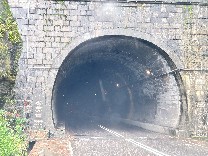
Ambuluwawa Tower
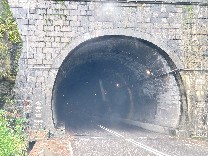
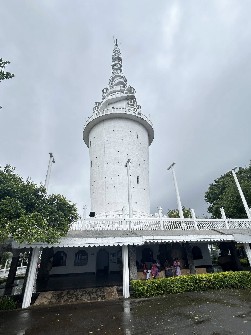
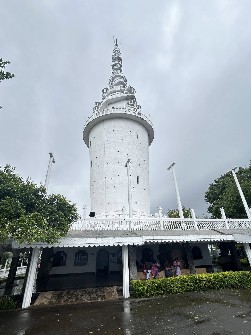
On the way to Kandy from Nuwara Eliya, we took a short detour towards Gompala to visit Ambuluwawa Tower. Ambuluwawa Tower is a striking architectural and spiritual landmark located atop Ambuluwawa Mountain near Gampola in Sri Lanka’s Central Province. Rising approximately 48 meters (about 157 feet) above the summit, the tower offers a panoramic 360-degree view of the surrounding landscape, including prominent peaks. The tower’s spiral design, reminiscent of a Buddhist stupa, symbolizes the path to enlightenment. Each ascending level represents elements of Buddhist philosophy, culminating in the concept of Nirvana. Notably, Ambuluwawa is Sri Lanka’s first multi-religious sanctuary.
Standing atop the Ambuluwawa Tower, surrounded by breath-taking 360-degree views of misty mountains, lush greenery, and winding rivers far below, as the cool breeze brushes against my face and the clouds drift close, I feel both exhilarated and humbled — like I am suspended between earth and sky. It is a moment of awe, serenity, and pure connection with the beauty of Sri Lanka. The tower spirals into the sky like a dream, blending architecture with nature in a surreal, almost magical way.
Sri Dalada Maligawa
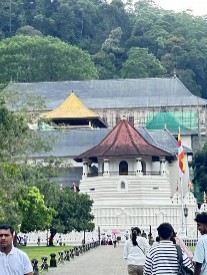
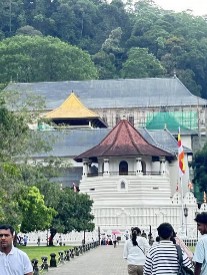
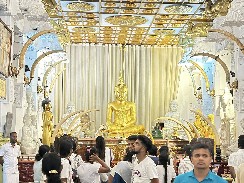
Visited the Temple of the Sacred Tooth Relic, locally known as Sri Dalada Maligawa, is a revered Buddhist temple located in the city of Kandy, Sri Lanka. It is renowned for housing the sacred tooth relic of the Buddha, an object of immense spiritual significance to Buddhists
around the world. Situated within the royal palace complex of the former Kingdom of Kandy, the temple is not only a major pilgrimage site but also a symbol of national pride and cultural heritage. The tooth relic is kept in a golden casket, protected within a series of nested shrines, and is only shown to the public during special religious ceremonies.
Surrounded by scenic hills and the tranquil Kandy Lake, the temple is a UNESCO World Heritage Site and draws thousands of devotees and tourists annually.
Sri Maha Bodhi Viharaya
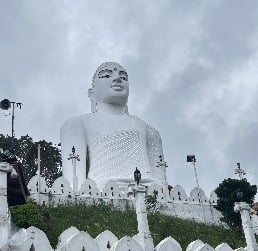
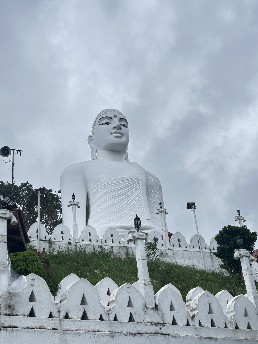
The Sri Maha Bodhi Viharaya, also known as the Bahirawakanda Vihara Buddha Statue, is a prominent Theravada Buddhist temple situated atop Bahirawakanda Hill in Kandy, Sri Lanka. Approximately 2 km from the city center, this temple is renowned for its towering white Buddha statue, which stands at 26.83 meters (88 feet), making it one of the tallest in the country. The statue depicts the Buddha in the Dhyana Mudra, symbolizing meditation and
enlightenment.The temple's construction began in the late 1980s under the guidance of Ven. Ampitiye Dammarama Thero, with support from the government and local communities.
Completed in 1992 and officially opened in 1993, the temple has sincebecome a significant religious and cultural landmark in Kandy. When we visited the Viharaya, it rained heavily, so we stayed in the temple for about 45 minutes and then ran to our cab as it slowed a bit to be back to our hotel in time. But, during 45 minutes we had a very good conversation with one of the monks staying there.
Kandy Lake
Kandy Lake, also known as Kiri Muhuda or the Sea of Milk, is a picturesque man-made lake located in the heart of Kandy, Sri Lanka. Built in 1807 by King Sri Wickrama Rajasinghe next to the Temple of the Sacred Tooth Relic, it adds a serene and spiritual charm to the city. Surrounded by lush greenery and colonial architecture, the lake is a popular spot for peaceful walks and scenic views. Its calm waters and central location make it a beloved landmark and a symbol of Kandy’s historic and cultural significance. It was raining heavily during our visit and due to paucity of time, we could take few pics from a distance and couldn’t walk on the beautiful pathway. During the intermittent stoppage of rain, we could see many tourists getting themselves photographed by the sides of beautiful lake.
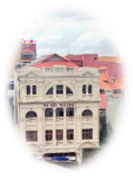
After staying for one night in Kandy, we returned to Colombo. We stayed at Zest Metropole, which is a contemporary boutique hotel in the vibrant heart of Colombo, on Hospital Street—a narrow lane steeped in colonial charm. This area is renowned for its proximity to the historic Dutch Hospital complex, a 17th-century Dutch colonial building that has been transformed into a lively precinct featuring restaurants, shops, and live music venues. Dutch colonial past. Structures like the Old Colombo Dutch Hospital, dating back to 1681, showcase the era's distinctive design elements,including thick walls and massive teak beams . These buildings have been meticulously preserved and repurposed, blending historical aesthetics with modern functionality.
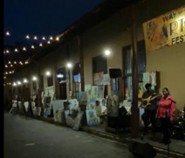
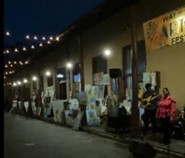
Beyond architecture, the area pulses with artistic and musical energy. It regularly hosts live music performances, creating a vibrant atmosphere that attracts both locals and tourists. Fairway Hotel, next door had organised a live musical extravaganza, which started at around 6 PM and went on beyond 12.00 midnight. This fusion of colonial architecture, contemporary hospitality, and dynamic cultural experiences makes it a captivating destination for travellers seeking to immerse themselves in Colombo's rich heritage and lively arts scene.
Leaving our hearts at Sri Lanka with a promise to be back to see more of it especially Ella, Anuradhapura, Polonnaruwa, Yala National Park, Adam’s Peak (Sri Pada), Trincomalee, Jaffna and many other beautiful places Sri Lanka offers for tourists, we left by an early morning Air India Flight Back to Home with beautiful memories.
Note: Information on various monuments, places listed above are from various websites and Wikipedia, without any intention of copyright infringements. However, all pictures in the Travelogue are self-clicked .
Part-2
As we left our hearts in Sri Lanka during previous visit, we had to reach at it again, so we are back to the beautiful paradise – Sri Lanka. We started from the Airport to Anuradhapura, which is about 170 kms journey and it takes about four and a half hours to reach. We came to know that a jamboree of about 10000 cubs – children from different schools in Sri Lanka and around the world, were going to be in Anuradhapuram during the weekend to participate in the 14th National Cuboree, a flagship international scouting event organised by the Sri Lanka Scout Association. With so many cubs, accompanied by parents or by school teachers, in the city, it became a challenging for us to get a hotel on reaching there. We couldn’t book any hotel online due to huge demand, and none of the good ones showed availability. We decided to take a chance, and reached Heritage Hotel, which is considered one of the good places to stay. No rooms were available there, but, the staff of Heritage Hotel helped us in obtaining one room in Lake Forest Hotel, which was nearby after calling them. We were fortunate to get the only room available because of last minute cancellation. The hotel, though expensive, was value for money.
Anuradhapura
Lake Forest Hotel is a serene lakeside retreat in the ancient city of Anuradhapura, Sri Lanka. It lies beside Tissa Wewa (a historic reservoir built by King Devanampiya Tissa), it combines modern comfort with natural beauty. The hotel features rooms with lake or forest views, spacious balconies, elegant décor blending contemporary style with nods to the region’s heritage, and a beautiful outdoor swimming pool overlooking the lake. It is mostly booked by tourists from Europe, USA, Australia etc. throughout the year as informed by the hotel staff.
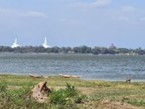
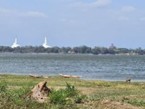
After checking in and taking sumptuous lunch, it was time to explore Anuradhapura. Anuradhapura unfurls its majesty like a tapestry woven of light and legend, where each ancient monument echoes an eternal song of kings and mystics. Amidst lotus-filled reservoirs and avenues of whispering Bodhi leaves, golden stupas glitter with centuries of silent devotion and stone sentinels catch the blush of dawn. The air trembles with incense and the rhythms of ritual, as pilgrims seek the blessings of sacred relics beneath the celestial gaze of arched pillars and regal moonstones. Here, history does not merely linger—it radiates, turning every courtyard and quiet pond into the theatre of divinity, wisdom, and unending beauty.
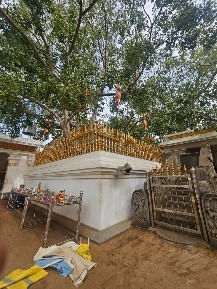
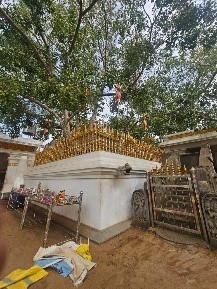
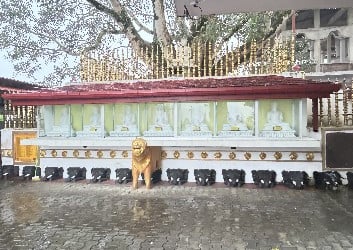
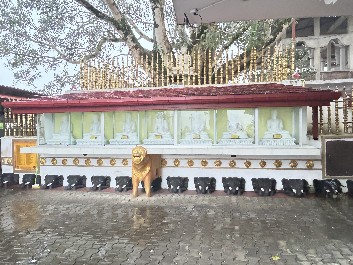
Sri Maha Bodhi Tree: Revered as the oldest historically authenticated tree on earth, this sacred fig descends from the one beneath which Buddha attained enlightenment. Its golden railings gleam in the e early morning light and devout pilgrims circle its ancient roots in prayer. It is believed to be a tree grown from a cutting of the southern branch from the historical sacred bo tree, Sri Maha Bodhi, which was destroyed during the time of Emperor Ashoka, at Bodh Gaya in India, under which Siddhartha Gautama (Buddha) attained enlightenment. In 236 BC, the Buddhistnun Sangamitta Maha Theri, a daughter of Ashoka, brought the tree cutting to Sri Lanka during the reign of Sinhalese King Devanampiya Tissa. At more than 2,300 years old, it is the oldest living human-planted tree in the world with a known planting date.
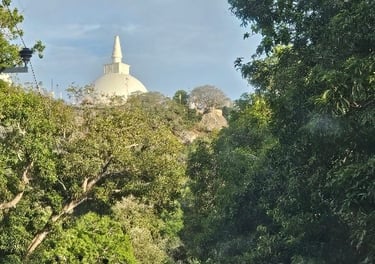
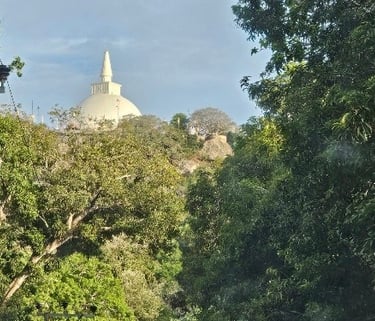
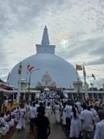
Ruwanwelisaya Stupa: A gleaming white dome rising like a moon above the city, this colossal dagoba is famed for its sheer size and architectural purity. Morning and evening visits reveal its grandeur as worshippers gather to offer flowers and chants. It was
built by Sinhalese King Dutugemunu in c. 140 B.C., who became king of Sri Lanka after a war in which the Chola King Elāra (Ellalan) was defeated. This is one of the "Solosmasthana" (the 16 places of veneration) and the "Atamasthana" (the 8 places of veneration). The stupa is one of the world's tallest ancient monuments, standing at 103 m (338 ft) and with a circumference of 290 m (951 ft).
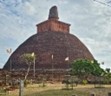
Jetavanaramaya Stupa: Once the tallest structure outside Egypt, this massive brick stupa still dominates the skyline, reminding visitors of the impressive engineering and spiritual ambition of ancient Lanka. At 122 metres (400 ft), it was the world's tallest stupa, and the third tallest structure in the world (only behind the two great pyramids: Great Pyramid of Giza and Pyramid of Khafre) when it was built by King Mahasena of Anuradhapura (273–301).
Abhayagiri Monastery: Ruins stretching across 500 acres where over 5,000 monks once dwelled, now dotted with exquisite stone carvings, moonstones, and the meditative gaze of the Samadhi Buddha. Early visits are best for exploring its tranquil vastness and secret relics. It is stated in the chronicles that Abhayagiri Dagaba was established by King Valagamba during the period of his second reign, from 89 to 77 B.C.E. A young Brahmin named Tiya (Tissa) declared war against him. Tiya was deluded by the prophecy of another Brahmin that was destined to be king. Before the arrival of Bhikkhu Mahinda, who brought Buddhism to the island, Brahmins held the highest place in society. After the establishment of the Buddhist sangha on the island, however, they lost their supremacy and were replaced by the sangha.
There are other famous Budhist sites in Anuradhapura like Thuparamaya Temple. Isurumuniya Rock Temple, Mirisawetiya Stupa & Lankarama Stupa, Mihintale and an Archaeological Museum and National Park. For one night stay it was not possible to visit all the sites from inside in a single day. So we continued on the second day, taking a round of Budhist sites by our cab starting early morning and then continued our journey towards Sygiriya. In my earlier blog, I have written about Sygiriya., At that time I went alone there. This time, I was accompanied by my wife, and explored Sygiria and Dambulla Cave Temples once more.
Sigiriya
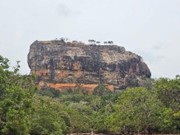
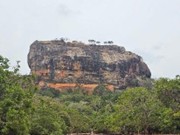
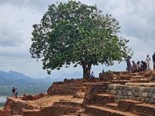
Amidst the emerald heart of Sri Lanka, where whispers of kings echo through time, rises Sigiriya—the Lion Rock, a towering citadel carved by both nature and ambition. This colossal fortress, chosen in the 5th century AD by King Kasyapa as his royal refuge, stands as a silent sentinel of a dramatic tale—of betrayal, exile, and grandeur. At its base, the Royal Gardens unfurl in harmonious geometry, with water gardens, boulder gardens, and terrace gardens that mirror ancient engineering marvels still vibrant with life.
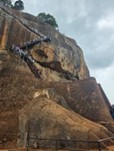
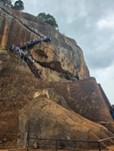
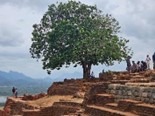
The ascent begins past moss-cloaked boulders and winding stairways, eventually leading to the world-renowned Sigiriya frescoes—ethereal maidens painted with delicate grace, their colors still aglow after fifteen centuries. Further up, the Mirror Wall, once polished so finely that the king could see his reflection, now bears graffiti from visitors of centuries past, verses of love and awe etched into eternity. One climbs nearly 1,200 steps, passing between the colossal Lion’s Paws—remnants of a grand stone beast that once guarded the gateway to the summit. At the summit itself, the ruins of Kasyapa’s Sky Palace lie open to the heavens, with stone foundations that whisper of royal chambers, thrones, and bathing pools suspended in the clouds. Some Sri Lankan legends and alternative historical theories suggest that Sigiriya may have originally been one of Ravana’s palaces or strongholds, later repurposed by King Kashyapa. Ravana is said to have had several palaces and airstrips (like the mythical Dandu Monara, or “flying peacock”) around Sri Lanka, and Sigiriya’s unique structure fits the narrative for such ancient architecture.
Every day, this sacred ascent is made by pilgrims, scholars, dreamers, and wanderers—travellers from across the globe and young students from Sri Lanka, all drawn by the rock’s timeless allure. Sigiriya is not merely a monument—it is a living testament to ancient artistry, kingly vision, and the eternal call of wonder. It was my second visit to Sigiriya, and it was worthwhile.
For Indian and Tourists from South Asian countries, it is recommended to carry passports everywhere as Indians and South Asian nationals can get discounted SAARC country tickets for entry.
Dambulla Cave Temple
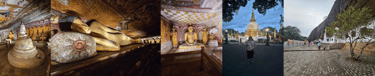
After visiting Sygiriya Rock Palace, on return journey, we visisted Dambulla Cave Temple. I had the opportunity to visit the Dambulla Cave Temple earlier too. The beautiful Golden Temple of Dambulla, which is a UNESCO World Heritage Site located in central Sri Lanka. This remarkable complex of rock temples dates back to the 1st century BCE and is renowned for its stunning preservation and historical significance.
Beneath a vast overhanging rock, the temple consists of five major caves filled with intricate murals and over 150 statues, primarily of the Buddha. These sacred spaces have served as places of worship for over two millennia, showcasing the evolution of Sinhalese Buddhist art and architecture. Surrounded by panoramic views of the countryside, the Dambulla Cave Temple remains a vital pilgrimage site and a testament to Sri Lanka’s rich cultural and religious heritage.
Initially we had a plan to go to Polonnaruwa directly from Anuradhapura. However, impromptu, we changed the program and added Sigiriya and Dambulla cave temples in our route to Polonnaruwa from Anuradhapura. After visiting Dambulla, though, it was late in the evening, we continued our journey to Polonnaruwa. Our cab driver, Arun Kumara, was expert and could drive smoothly and safely. He also suggested us the hotel, based on our choice and specifications. He suggested, we should stay at Sudu in Sudu Araliya. We booked the hotel online and at a reasonable rate from the MMT booking site, inclusive of breakfast and dinner. We chose garden/lake view room and decided to have dinner before we move into the room, as it was late already. However, after dinner, when we went to our room, we found that it was a corner room with no king or queen bed, but two beds joined together and a boundary wall visible from the balcony. It took me almost one hour of discussions with their staff and senior personnel to get the room changed to what we paid for, that is the garden / lake view. The Hotel staff was trying to act smart with us, saying hotel is overbooked and no rooms are available, However when I asked them to refund the money as I booked for garden/lake view, the person at the reception spoke to the General Manager of the Hotel. Initially denying (lying) many times, that no rooms are available, later agreed to allocate the room we had booked and paid for. The other room was extremely good, but our initial experience after a sumptuous dinner and stroll in lake side garden wasn’t that good. The hotel is a nice place to stay provided their staff do not act smart and cheat the customer to make the experience unpleasant. The hotel has a huge garden besides the lake and the ambience is nice, food is good and staff serving the food were nice.

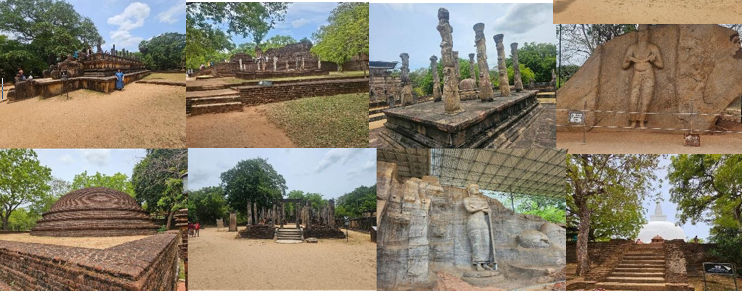
Polonnaruwa
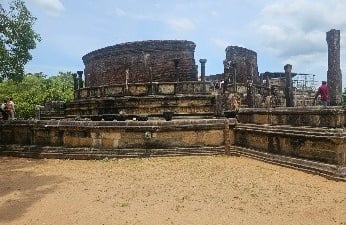
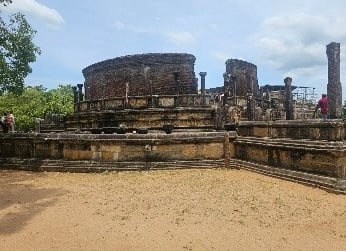
In the heart of Sri Lanka’s cultural cradle lies Polonnaruwa, a city where time whispers through ancient stone and the air hangs heavy with the majesty of a bygone era. Once the royal seat of kings and a beacon of civilization, Polonnaruwa unfurls like a golden scroll of history beneath the tropical sun. Here, amidst the silent ruins, the Royal Palace of King Parakramabahu rises in solemn grandeur, its weathered bricks still echoing with the footsteps of monarchs and ministers.
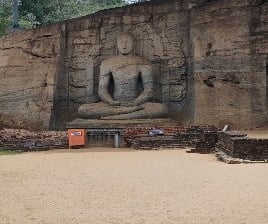
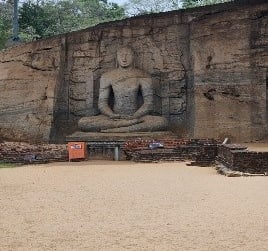
The vast and symmetrical Parakrama Samudraya, a man-made ocean of wisdom, mirrors the skies above and the genius of ancient irrigation below. Wander into the sacred embrace of Gal Vihara, where colossal granite Buddhas lie in eternal meditation, chiseled with divine serenity under the open sky. At Rankoth Vehera, the towering stupa stands like a sentinel of devotion, while the ornate Vatadage whispers of moonlit rituals and sacred offerings. Within the mystical shadows of Lankatilaka and Thivanka Pilimageya, faded murals and towering statues cradle the essence of spiritual artistry. Before one enters this timeless realm, a stop at the Polonnaruwa Museum is both enlightening and essential—a treasure trove of relics, narratives, and visual reconstructions that breathe life into the ruins beyond. For foreign travelers, access to this UNESCO World Heritage Site is granted with a single ticket, currently priced US$35, which includes entrance to the museum and all major archaeological sites—an offering that opens the gateway to centuries of wonder. As stated earlier, for Indian Tourists, it is recommended to carry passports everywhere as Indians get SAARC country discounts and we paid 50%. In Polonnaruwa, history does not sleep—it breathes, watches, and welcomes all who seek beauty beyond the veil of time.
Negambo (Tamarind Resort)
In the last blog, I have written in details about Negambo, as an anxious first time visitor. In this visit, we preferred to relax in Tamarind Garden Resort cottage (a bit away from sea) for couple of days. Tamarind Tree Garden Resort offers a sanctuary of tranquillity just a short drive from Bandaranaike International Airport and the golden shores of Negombo Beach. With its elegant rooms, gracious Sri Lankan hospitality and an Ayurvedic wellness centre, it seamlessly blends comfort and cultural authenticity. Guests can wander winding nature trails, engage in bird-watching beneath towering palms, or sample vibrant local flavours in meals grown from the resort’s own organic gardens. Whether arriving for business, lay-overs, or a restful holiday, the resort feels like a rest-full place.
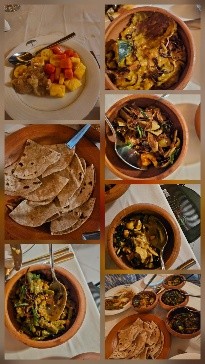
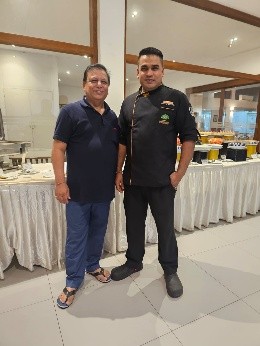
Heartfelt Thank You to Chef Pradeep – A Culinary Maestro at Tamarind Tree Garden Resort, Negombo: During our recent stay at the Tamarind Tree Garden Resort in Negombo, one of the highlights of our experience was undoubtedly the exceptional care and attention shown to us by Chef Pradeep. As vegetarian guests, with a deep love for Indian cuisine, we were truly touched by Chef Pradeep’s thoughtfulness and dedication. He went out of his way to specially prepare a delightful variety of authentic vegetarian Indian dishes and Sri Lankan vegetarian cuisine for us—each meal bursting with flavour, freshness, and the warmth.
From perfectly spiced curries to beautifully balanced dals and fragrant rice dishes, every plate reflected not only his culinary expertise but also his sincere desire to make us feel welcome and cared for. He especially cooked many vegies like Okra, Water Spinach, Pumpkin, Cabbage, Cashew curry, Cauliflower etc. along with chapattis, which tasted delicious and we shared it with our Sri Lankan friends who also appreciated it. It is rare to come across a chef who so genuinely accommodates dietary preferences while still maintaining such high standards of taste and presentation.
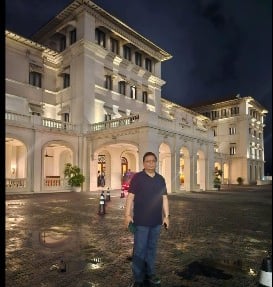
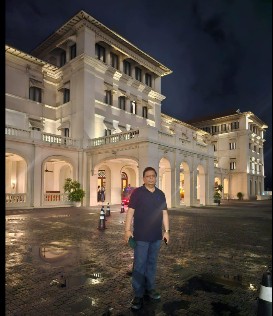
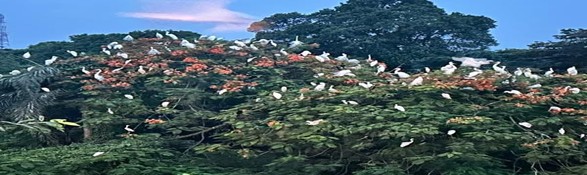
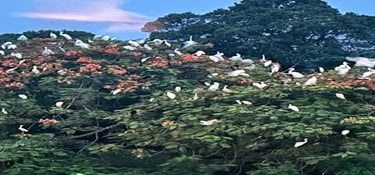
Flocks of birds returning home to the tree in the centre of lake at MAS Athena. This is the wonder of being with the nature.
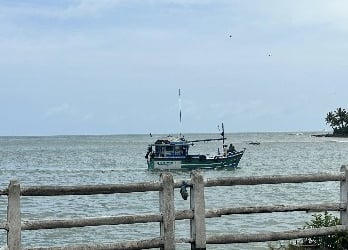
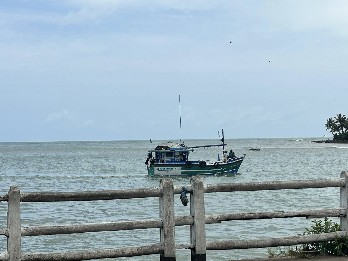
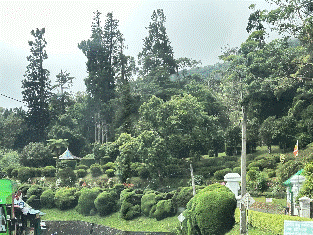
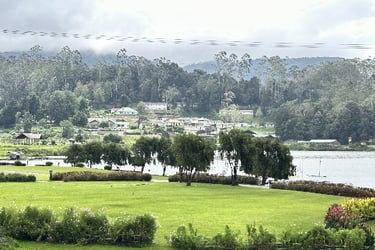
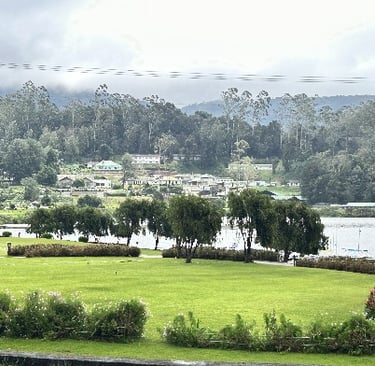
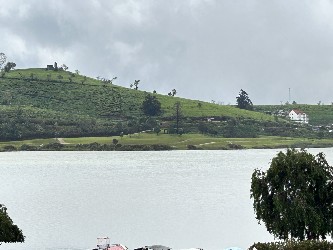
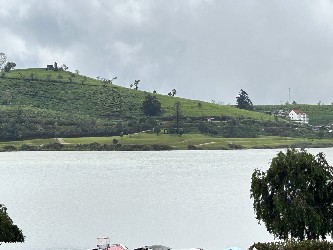
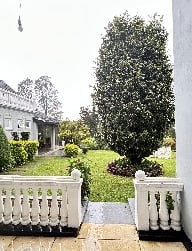
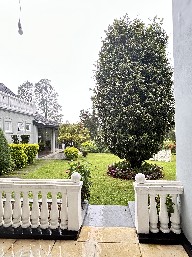
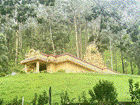
View from Lake Forest Hotel
Colombo
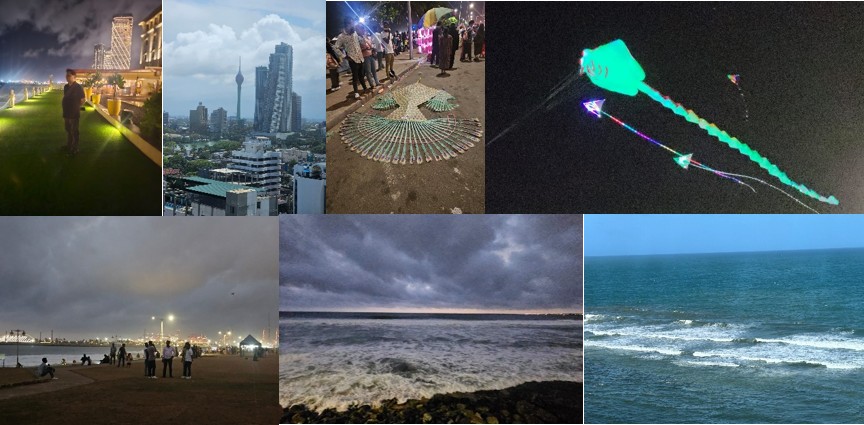
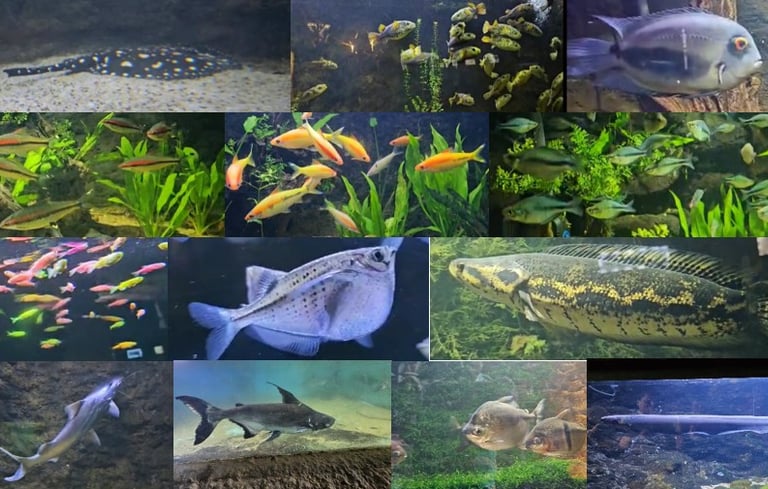
Amari hotel is one of the topmost ocean side hotels in Colombo. Not only the view from the glass wall of sea facing rooms is splendid, it has a rooftop dining with music at 28th Floor from where one can appreciate part of the city including lotus tower on one side and vast ocean on the other. Amari serves lavish breakfast and has a great a la carte menu for any time meals and huge bar for serving all sorts of drinks including my favourite passion fruit juice/mocktail. Amari staff was kind enough to upgrade us in a king ocean view room from superior ocean view room on complimentary basis for the last two days. Since, we had already seen all the key tourist spots in Colombo, this time we only visited a beautiful water park, which had a huge aquarium and fishes from across the globe, a bird park with lot of birds from different part of the world and a short boat ride. After relaxing for whole day, evenings were enjoyed stralling at Galle Face green. Galle Face is a large, open-air urban park and promenade in Colombo, Sri Lanka, known for its vibrant atmosphere, scenic ocean views, and historical significance. Popular for kite-flying, strolling, and watching sunsets over the Indian Ocean, it also features numerous small food stalls and is adjacent to modern hotels like Galle Face Hotel, Shangri-La Taj Samudra, Sheraton, ITC Ratnadeep etc. and the city's port. We were also fortunate to witness a mega Kite festival with a musical concert at Galle Face one of the days. Some pictures at Galle Face:
Water World- Kelaniya- Sri Lanka
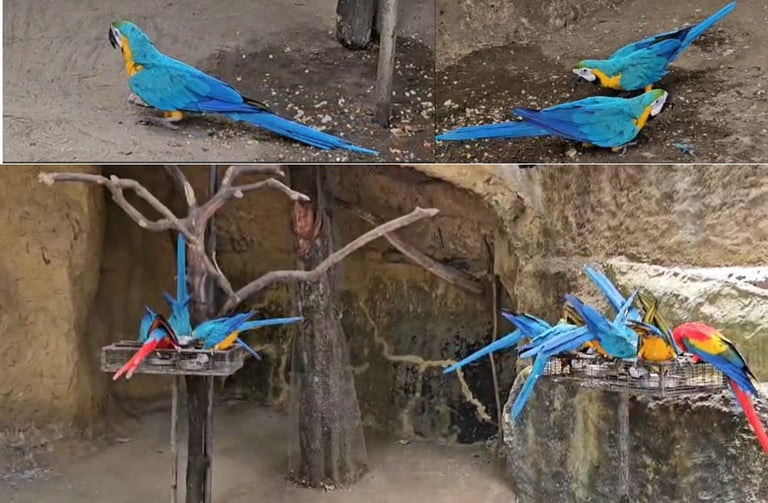
The best water park with an aquarium and bird park near Colombo is Water World Lanka in Kelaniya, Sri Lanka. It features South Asia's first underwater tunnel aquarium with a variety of fishes and has a bird park with an aviary-themed river safari. It has over 500 fish species, including black diamond stingrays, shark and piranhas, besides beautiful fishes from across the globe. the first Bird Park in Sri Lanka, home to a breathtakingly splendid collection of feathered friends from regions around the world such as the Amazon rain forest in South America, Tropical Asia, Australia and Africa. The colourful range of birds on public display includes the largest species collection of exotic parrots.
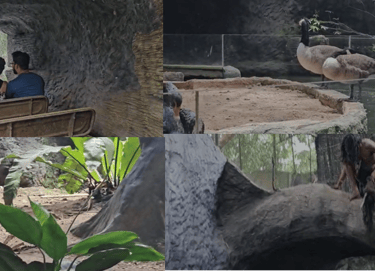
Water World Boat Ride
The “River Safari” is a 15 minutes fun boat‑ride through a curated river environment featuring ecosystems inspired by famous rivers of the world: e.g. Amazon, Ganges, etc., including local Kelaniya river settings. It’s also described as an aviary river safari, combining boat ride, bird life overhead, fish, and educational introductions.
Water World Shooting Gallery
There is a shooting gallery within the Water World where one can try an Air Gun with 5 shots for LKR 400. I tried first time ever in life and my first shot was bang on target, though I missed to hit the bull’s eye for rest four by few inches.


Dinner at Indian Kitchen- A Symphony of Spices in the Heart of Colombo
Stepping into Indian Kitchen is akin to crossing a fragrant threshold into the soul of India itself. In the vibrant heart of Colombo, this culinary sanctuary doesn’t merely serve food — it weaves an experience, rich in colour, aroma, and timeless tradition.
The ambiance is a poetic blend of Pondicherry’s colonial charm and India’s rustic soul — glowing lanterns, textured wood, artful pops of colour — a space where every corner feels kissed by heritage. There’s a gentle hum of conversation, clinking cutlery, and the soft scent of roasted cumin and saffron in the air. Time, somehow, feels slower here.
Then comes the food — and with it, a rhapsody of flavours that dance across your palate like a well-rehearsed classical raga. Since, I am a vegetarian, I ordered paneer dish and dal, and it was prepared with reverence, and had depth of flavour and balance. The paranthas, also leave your taste buds to long for more.
Service is warm, intuitive, and attentive without intrusion. If there is one truth that emerges from a meal here, it is this: Indian Kitchen doesn’t just cook — it tells stories.
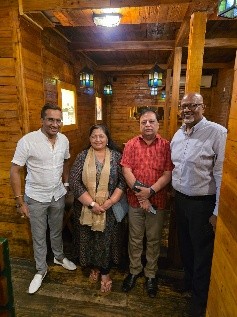
I met Mr Vincent Renold, a lively person at heart, the Founder and Director of Indian Kitchen and Mr N Ragunathan, General Manager (Operations). We spoke to Mr Vinvent at length about his venture and also about the places we visited in Sri Lanka during our trips. He told us about Dambana and Vedda community, and promised to take us along during our next visit. He also offered to drop us to our Hotel, which we thanked him for and walked back. Hope to see him again.
Dinner at Taj Samundra
We also explored Taj Samudra Indian Dining experience, which was par our expectation. Food prepared with care and great taste, it was a good experience.
We have to still explore few key tourist places in Sri Lanka like Jaffna, , Trincomalee, visit to Vedda People (natives) in Dambana, visit to Ella and hiking on Adams Peak (If I could do). May be in my next visit, till then Ayubowan and “śrī laṁkāva hamuvemu” ("Let us meet Sri Lanka" ) soon for Part-3.
International Tourist from India normally try to explore places in Europe, North America, Australia, NewZealand, Africa, nearby Middle East countries but miss on immediate neighbour, especially tourist friendly Sri Lanka. Probably alternatives in Southeast Asia (Thailand, Vietnam, Indonesia) that offer similar cultural and natural experiences with possibly more stable infrastructure and stronger tourism marketing campaigns.
We decided to explore parts of Sri Lanka during our recent visit. Sri Lanka is a small island with a big heart—and stunning natural beauty. Despite its size, the country offers a rich variety of landscapes, ecosystems, and cultural experiences, making it a paradise for nature lovers and adventure travellers.
Sri Lanka, an island nation in the Indian Ocean, boasts a rich and diverse history spanning over 2,500 years. Known in ancient times as Lanka and later Ceylon, it has been a center of Buddhist scholarship and Sinhalese civilization since the 3rd century BCE. The country was home to powerful ancient kingdoms like Anuradhapura and Polonnaruwa, which left behind impressive ruins and stupas. Gaining independence from British colonial rule in 1948, Sri Lanka today is a vibrant Republic known for its natural beauty, spiritual heritage, and cultural diversity.
Sri Lanka offers Pristine beaches and stretches of golden sands, cool & misty highlands around Nuwara Eliya, Ella, and Haputale offering lush green hills, waterfalls, and tea estates, UNESCO World Heritage virgin rainforests in the world, train ride from Kandy to Ella in the hills, Cultural heritage in natural settings like Sigiriya Rock Fortress, Dambulla Cave Temple, Anuradhapura & Polonnaruwa, Lakes & Lagoons, and many architectural marvels.
We reached Colombo, the Capital of Sri Lanka by Air India Flight. After checking in the Hotel, it was time to explore the city. However, before that, watching the ocean from its restaurant over a cup of tea was magical.
Colombo
Colombo, the commercial capital and largest city of Sri Lanka, is often the first stop for travellers arriving in the country. Colombo offers a vibrant mix of colonial arm, modern city life, cultural sites, shopping, and coastal views—making it worth at least two days in any itinerary. There are many beautiful tourist places in Colombo to explore.
Gangaramaya Temple
Gangaramaya Temple is one of the most significant and iconic Buddhist temples in Colombo, Sri Lanka. Located near Beira Lake, it blends traditional Sri Lankan, Thai, Indian, and Chinese architecture. The temple serves as a place of worship, a center for learning, and a museum that houses a vast collection of artifacts, including Buddha statues from around the world. Founded in the late 19th century by Venerable Hikkaduwe Sri Sumangala Nayaka Thera, Gangaramay
plays an important role in Sri Lankan Buddhist culture and hosts the annual Navam Perahera, a grand religious procession
Some Glimpses of Gangaramaya Temple.
During our visit, we saw that just outside the temple with temple as a background, shoot for Miss teen Sri Lanka was going on. We could click the picture of the beautiful participants
Biera Lake
Beira Lake is a historic and scenic urban lake located in the heart of Colombo, Sri Lanka.
Spanning approximately 160 acres, it serves as a tranquil oasis amidst the bustling city, offering both locals and visitors a serene escape. Originally constructed by the Portuguese in the early 16th century, Beira Lake was designed as a defensive moat to protect Colombo from invaders. The Portuguese connected a natural stream to the marshy land surrounding the fort, creating a large water body. Over time, the lake's area was expanded by the Dutch
and later the British, who removed crocodiles and developed the surrounding area for recreational activities such as rowing and yachting. In the 19th century, land reclamation began, reducing the lake's size. The Lake in day time is beholding. One can walk around the lake for hours together.
Gangaramaya Temple is on the lake's edge. Renowned architect Geoffrey Bawa designed Seema Malaka Temple in 1976. This temple is built on three platforms over the water and serves as a Centre for meditation and rest. It is part of the Gangaramaya Temple complex.
Lotus Tower
The Colombo Lotus Tower, locally known as Nelum Kuluna, is Sri Lanka’s tallest and South Asia’s highest self-supported structure, standing at 356 meters
(1,168 feet). Completed in 2019 and opened to the public in 2022, this iconic lotus-shaped tower symbolizes the nation's blend of tradition and modernity. It has an Observation Deck at 244 meters offering 360° panoramic views of Colombo,
Beira Lake, and the Indian Ocean. It has the only Revolving Restaurant of Sri Lanka situated on the 26th floor, Cosmic Banquet Hall, Telecommunication Museum, Exhibition Hall and in the evenings, the tower illuminates with a
captivating light and sound display.
It was a rainy day and despite waiting for about an hour, we didn’t get the tickets for observation deck; as the tickets were not being sold.
We were told by the reception that the observation deck opens in the sky and it is risky to visit the deck on rainy days. So, we just took pictures at Lotus Tower and returned back a bit dejected (May be in next visit).
Bar of Galle Face Hotel
If you are not staying here, it is a good idea to spend at least one evening at open Bar of Galle Face Hotel. Sri Lanka’s iconic landmark, The Galle Face Hotel, is situated in the heart of Colombo, along the seafront and facing the famous Galle Face Green. One of the oldest hotels, The Galle Face Hotel embraces its rich history and legendary traditions that resonate with old and new generations of travellers alike.
The waves hammering the sea wall like thunderous applause, as we enjoyed the passion fruit based fresh drink along with snacks, while appreciating the live music.
Local Train Journey
Riding a local train along the coastal line in Colombo is an unforgettable experience, especially when shared with the locals. The train hugs the edge of the Indian Ocean, offering stunning, uninterrupted views of the turquoise waves crashing against sands and stones just feet away from the tracks.
The sea breeze flows freely through the open windows, blending with the gossip of daily
commuters. Started journey from Wellawatte railway station to Panadura in a local for about 45 minutes then return from Panadura to Fort Colombo Railway Station. The return journey towards Fort Station was awesome as it felt sometimes that the waves would just dash you.
Who would not love to travel in this train over and over again, kissing the shore on one side and entrancing ocean on the other?
Colombo National Museum
Next day we visited Colombo National Museum in the afternoon. The Colombo National
Museum, established in 1877, is Sri Lanka’s largest museum. Located in Colombo, it houses a rich collection of artefacts, including royal regalia, ancient sculptures like the Toluvila Buddha, and cultural items from Sri Lanka’s diverse history. It also features a library with rare manuscripts and an adjoining Natural History Museum. Some glimpses from
inside the museum:
Colombo Streets
Colombo is one of the cleanest cities in Sri Lanka. The streets are well-maintained, with regular
waste collection and neatly organized public spaces. Beautiful parks, tree-lined roads, and modern
infrastructure add to the city’s charm. Efforts by the local authorities and community help keep Colombo clean and attractive for both residents and visitors. In cleanliness, the city may give
run for the money to many European and North American streets. Today visited University area, Olympic village, passed from the front of Ministry of Sports and Youth Affairs, Theatre. Schools and Colleges in scorching Sun. After walking about 4 kms came back to rest for two hrs and prepare to move on to next city.
Colombo, Sri Lanka's bustling capital, presents a fascinating and often challenging landscape when it comes to roads and traffic. The city's road network, while generally well-maintained in its main arteries, can quickly narrow into congested lanes within residential and commercial hubs. During peak hours, particularly in the mornings and evenings, traffic slows down in many areas with long queues of cars, tuk-tuks (auto-rickshaws), motorcycles, and buses vying for space. Drivers often exhibit patience with hardly any honking. One can easily get Uber (Cabs & Auto) as well as Kangaroo Cabs (On advance bookings). There is also Pick Me app, which can be used for quick hiring of tuk tuks and cabs. Tuk-Tuk (Auto) is very easily available at all streets, but one may need to negotiate the fare. I observed that the car drivers in Sri Lanka drive carefully, mostly in lane, giving proper signals, there are many one ways to avoid congestions and Traffic Police is active in facilitating ease of traffic as well as penalising those who break rules. We saw few minor accidents too, however mostly drivers follow rules, take care of pedestrians crossing the roads at zebra crossings either by slowing down or by stopping. Due to narrow highways, traffic speed remains slow, though one will find that on hills the speed limits for four wheelers goes upto 70KMPH. The roads all across Sri Lanka are mostly in very good conditions and smooth.
Mas Athena
We got the opportunity ro visit MAS Athena, Learning Centre with a difference. Nestled within the verdant expanse of MAS Fabric Park in Thulhiriya, MAS Athena stands as a beacon of sustainable learning and development. Established in 2007 by MAS Holdings, it offers a harmonious blend of modern educational facilities and eco-conscious infrastructure, fostering both professional growth and environmental stewardship.
A Serene and Sustainable Setting
MAS Athena is enveloped by the lush landscapes of MAS Fabric Park, a 165-acre privately owned apparel-intensive free trade zone. The park is home to “Thuruwadula,” a 10-acre analog forest that serves as a sanctuary for biodiversity, featuring endangered endemic plant species and various fauna. This green initiative underscores the commitment to environmental conservation and provides a tranquil backdrop for learning
State-of-the-Art Infrastructure
The facilities at MAS Athena are designed to cater to a wide range of corporate and educational needs:
• Training and Conference Facilities: Equipped with modern classrooms and a 500+ seat auditorium, suitable for workshops, seminars, and large-scale events.
• Accommodation and Dining: On-site chalets and villas provide comfortable lodging, complemented by dining facilities and a franchised café.
• Recreational Amenities: A gym, Olympic-sized swimming pool, and sports grounds for basketball, cricket, and volleyball promote wellness and team-building.
• Sustainable Utilities: The park features
centralized water treatment and distribution facilities meeting WHO standards, a medium voltage power distribution system, and Sri Lanka’s largest combined effluent treatment plant.
• Renewable Energy: MAS Fabric Park hosts the largest multi-site roof-mounted solar generator in Sri Lanka, with 19 installations totaling 23MW, including a 4.2MW installation on a single 10-acre roof.
Programs and Collaborations
MAS Athena offers a diverse array of programs aimed at enhancing professional competencies:
• Leadership Development: Initiatives include coaching for senior leaders, building high- performance teams, and strategic alignment workshops.
• Educational Courses: Certificate courses in Business Administration and Human Resource Management are available, developed in collaboration with MAS Education.
• Institutional Partnerships: Collaborations with institutions like General Sir John Kotelawala Defence University (KDU) offer specialized programs such as the Management Application Learning (MAL) program, focusing on energy and water resource management.
Commitment to Sustainability
MAS Athena’s integration within MAS Fabric Park reflects a broader commitment to sustainable industrial transformation. Innovative practices such as converting textile waste into eco-bricks for construction and producing certified compost fertilizer at a commercial scale exemplify this dedication.
The staff at MAS-Athena is very helpful and courteous. Even the Chef and waiters in the dining hall came to know that I am a vegetarian, having worked in UAE, the chef on the last day made specific Indian dishes for me to relish.
Sygiria
While we stayed at MAS-Athena, I hired a cab the next day and ventured for Sygiria and Dambulla. According to Sri Lankan legends rooted in the Ramayana, Sigiriya is believed by some to have originally been a grand fortress or palace built by King Ravana, the mighty ruler of Lanka.
Rising dramatically from the jungle, this massive rock formation is said to have housed
Ravana’s palace, offering both protection and a commanding view of the surrounding region. In front of Sigiriya lies a smaller hill known as
Wariyapola, which, according to folklore, is the place where
Hanuman first landed when he came to Lanka in search of Sita. The name “Wariyapola” roughly translates to “place of aircraft landing” in Sinhala, aligning with myths about Hanuman’s leap across the ocean and Ravana’s use of flying machines. Sigiriya is an ancient rock fortress and palace complex in central Sri Lanka.
It is said that Sygiriya Rock Palace was built by King Kashyapa I (477–495 CE), it’s known for its striking frescoes, water gardens, and the iconic Lion’s Gate. Sigiriya is a UNESCO World Heritage Site and one of Sri Lanka’s most famous historical landmarks.
Some Sri Lankan legends and alternative historical theories suggest that Sigiriya may have originally been one of Ravana’s palaces or strongholds, later repurposed by King Kashyapa. Ravana is said to have had several palaces and airstrips (like the mythical Dandu Monara, or “flying peacock”) around Sri Lanka, and Sigiriya’s unique structure fits the narrative for such ancient architecture.
I was fortunate to visit Sygiriya and climbed the rock through the path which is scary at times as one can see more than 100 metres directly through the iron stairs. Then while climbing vertically on round iron
stairs from outside the rock to see the murals, it takes a breath for a while. But, once you reach the summit, the view all around is awesome. One wonders, how the King, Queen, his courtiers, soldiers, ordinary people would daily climb up and down from this Rock Palace of about 150 M height. Surely, the place is was worth visiting.
After visiting Sygiriya Rock Palace, on return journey, I had the opportunity to visit the Dambulla Cave Temple, also known as the Golden Temple of Dambulla, which is a UNESCO World Heritage Site located in central Sri Lanka. This remarkable complex of rock temples dates
back to the 1st century BCE and is renowned for its stunning preservation and historical significance.
Beneath a vast overhanging rock, the temple consists of five major caves filled with intricate murals and over 150 statues, primarily of the Buddha. These sacred spaces have served as places of worship for over two millennia, showcasing the evolution of Sinhalese Buddhist art and architecture. Surrounded by
panoramic views of the countryside, the Dambulla Cave Temple remains a
vital pilgrimage site and a testament to Sri Lanka’s rich cultural and religious heritage. To honour the Holy shrine, I took only one picture inside and rest are from outside.
Bentota, Hikkaduwa and Galle
Initially we decided to stay at Bentota or Galle and see Hikkaduwa on the way. Later analysing the weather conditions, we decided to keep Colombo as base and go to Galle and while coming back see Hikkaduwa and Bentota on the way to Colombo and make a trip to Negambonext day from Colombo itself.
Bentota, Hikkaduwa, and Galle are three of Sri Lanka’s most popular coastal destinations, each offering a unique blend of natural beauty, history, and culture. Bentota is known for its tranquil beaches, luxury resorts, and the scenic Bentota River, ideal for boat safaris and water sports. Hikkaduwa, a short drive away, is famous for its vibrant coral reefs, surfing waves, and laid-back beach vibe, attracting both snorkelers and party-goers. Further south lies Galle, a historic city centered around the Galle Fort, a UNESCO World Heritage Site built by the Portuguese and fortified by the Dutch. The cobblestone streets, colonial architecture, boutique shops, and seaside views make Galle a captivating blend of the past and present. Together, these towns create a diverse and unforgettable coastal experience in southern Sri Lanka.
It is recommended that one must stay for one night in Bentotota and one night in Negambo to enjoy the Beaches, Lagoons, visit Churches, Temples and parks, go for boating in the lagoon and river, visit turtle
hatcheries, enjoy fishing and visit Dutch town in Galle.However, we completed almost all the site seeing activities (except boating as weather was not good) in the single day, but it became a bit hectic as we travelled about 250 Kms (To & Fro).
Negambo
Next day we started at around 9.00 AM for Negambo. Negombo is a bustling coastal city located just north of Colombo and close to Sri Lanka’s main international airport, making it a convenient first or last stop for travellers. Known for its long sandy beaches and vibrant fishing industry, Negombo offers a mix of local culture and relaxed seaside charm. The city’s Dutch colonial past is still evident in its historic canal system and old churches, such as the impressive St. Mary’s Church, where we met Father Anthony and many schoolchildren.
The Negombo Lagoon is a highlight, home to rich birdlife and traditional catamaran fishing boats. With its lively markets, seafood restaurants, and friendly atmosphere, Negombo provides an authentic glimpse into everyday Sri Lankan coastal life.
(Pic with Life Guards at Brown Beach, Negambo.)
Angurukaramulla Temple is a prominent Buddhist temple located in Negombo, Sri Lanka, known for its vibrant murals and impressive architecture. A key attraction is the giant seated Buddha statue at the entrance, which leads
visitors through the mouth of a dragon-like creature—a symbolic gesture of leaving behind evil. Inside, the temple features intricate wall paintings and sculptures that depict scenes from Buddhist mythology and Sri Lankan history. A peaceful and culturally rich site offers insight into the island’s religious traditions.
We covered most of the places at Negambo in whole day and were back to Colombo city late in evening covering about 130 kms in a day. However, it is a good idea to spend at least one day at some nice beach resort.
Nuwera Eliya
Burrowed in the cool highlands of Sri Lanka, Nuwara Eliya is renowned for its verdant tea estates. One can take a train to reach Nuwera Eliya, Kandy and Ella, but since we had limited time so hired a cab for few days to cover Nuwara Eliya and Kandy. The journey from Colombo to Nuwara Eliya is a breathtaking adventure through the heart of Sri Lanka’s hill country, unfolding like a scenic painting at every turn. As the road winds upward from the coastal plains into the central highlands, the landscape transforms dramatically—dense tropical forests give way to misty mountains and rolling hills blanketed with lush green tea estates that stretch as far as the eye can see. The cool air is filled with the earthy scent of tealeaves and the distant roar of cascading waterfalls. Along the way, majestic falls like St. Clair’s and Devon plunge gracefully down rugged cliffs, their silvery streams weaving through the greenery like ribbons of light. The roadside is dotted with quaint villages and smiling tea pluckers in colorful saris, adding charm to the already enchanting route. It’s a journey not just through changing altitudes, but through layers of natural beauty and serenity that leave a lasting impression on the soul. Nuwara Eliya is a must visit place in Sri Lanka.
Pedro Tea Estate stands out as a historic and picturesque destination. Established in 1885, Pedro Tea Estate is located approximately 3.5 kilometers east of Nuwara Eliya town, at an elevation of about 1,800 meters above sea level, providing ideal conditions for cultivating high-quality Ceylon tea. The estate offers guided tours of its factory, where visitors can observe the traditional processes of tea production, including plucking, withering, rolling, fermenting, drying, and grading. (No CTC, only orthodox tea with extremely rich flavour). Notably, the factory operates at night to preserve the delicate flavors of the tea, so daytime visitors may not witness the machinery in action. After the tour, guests can enjoy freshly brewed tea at the Lovers Leap Ethical Tea Boutique, which overlooks the lush plantations and the nearby Bomburu Ella reservoir. The estate is also committed to sustainable practices, supporting local communities and promoting eco-friendly farming methods. A visit to Pedro Tea Estate offers not only insight into Sri Lanka’s rich tea heritage but also an opportunity to experience the serene beauty of its hill country.
Seetha Amman Temple
Located about 5 km southeast of Nuwara Eliya town along the A5 highway, the Seetha Amman Temple, is believed to be the only temple in the world dedicated exclusively to Princess Sita. It stands on the site where, according to legend, Sita was held captive by King Ravana after her abduction. The temple is situated beside a stream, thought to be the one where Sita bathed and prayed daily for her rescue. Visitors can observe circular depressions on the rock face across the stream, believed to be the footprints of Hanuman, who met Sita here and delivered Rama’s ring as a sign of hope. The temple features South Indian architectural elements and houses statues of Lord Rama, Sita, Lakshmana, and Hanuman. The temple is maintained by the Indian Tamil community in Sri Lanka and is a popular pilgrimage site, especially during festivals like Rama Navami.
Adjacent to the Seetha Amman Temple lies the Hakgala Botanical Garden, believed to be the site of the mythical Ashok Vatika. According to the Ramayana, Ravana created this lush garden to persuade Sita to stay in Lanka. Sita, however, chose to remain under a tree in this grove, awaiting Rama’s rescue.
Established in 1861, the Hakgala Botanical Garden is the second-largest in Sri Lanka and boasts over 10,000 species of flora, including a variety of orchids and roses. The garden is a popular tourist attraction, drawing visitors who are interested in both its botanical offerings and its mythological significance. His Holiness Sri Sri Ravishankarji visited the temple on 19th May 2024. There is a plaque in his honour. I feel the grace to be able to visit the temple and see the swayambhoo murti and paws impressions of Hanuman.
Due to paucity of time, we tried to get a ride on the train for couple of stations from Nuwara Eliya to Ella, which is supposed to be one of the best train journeys of the world in hilly terrain. However, due to heavy rains trains were delayed and we had to miss the journey. (May be some other time).
Thought on lives of Tea Estate Workers
While sipping tastefully the best tea of the world at Pedro Tea Estate and appreciating the verdant tea gardens, I was thinking of the poor women workers who pluck the tea leaves daily to bring fresh aroma in our lives. They work incessantly for 8 hours in heat, humidity, rains, tough terrains, risking snake and insect bites, limited or no access to ease themselves and bruising themselves due to thick vegetation. I did some research which brings out some truth.
Tea plantation workers in Sri Lanka, continue to face significant socio-economic challenges despite their vital role in the country’s tea industry. As of May 2024, the government mandated an increase in the daily wage from LKR 1,000 to LKR 1,700 (approximately $5.66) to alleviate poverty exacerbated by the nation’s economic crisis. However, plantation companies have resisted this change, citing a 45% rise in production costs and potential threats to the industry’s global competitiveness.
Source: June 12, 2024 07:15 am IST - COLOMBO; Meera Srinivasan; thehindu.com
Despite the wage hike, many workers struggle to meet their basic needs. A study estimated that a tea estate worker’s family of four requires a daily income of LKR 2,321 (around ₹639) to maintain a decent standard of living, highlighting a significant gap between earnings and living costs.
Source: https://borgenproject.org/tea-plantation-workers-in-sri...
Working conditions remain arduous. Tea pluckers are often required to harvest at least 18 kilograms of leaves daily to earn their wages, leading to physical strain. A study reported that 68.5% of tea pluckers experienced musculoskeletal pain, with 43.4% suffering from lower back pain.
Source: https://journals.sagepub.com, Research article, First published online October 14, 2020
Living conditions are equally challenging. Many workers reside in overcrowded “line rooms” lacking proper sanitation, ventilation, and access to clean water. These inadequate living conditions contribute to health issues, including high rates of maternal and infant mortality.
Source: The tempest in your tea cup, 21/8/2018 ; Sri Lanka Brief ; seven year old article)
Education and healthcare access are limited. Approximately 47.8% of estate household heads have only five years of schooling, and 12.2% have no education. Healthcare services are often inaccessible, leading to poor health outcomes among workers.
Source: https://www.lankaweb.com/.../contract-farming-could-save...
The combination of low wages, demanding work conditions, inadequate living standards, and limited access to essential services underscores the systemic challenges faced by tea plantation workers. Addressing these issues requires comprehensive reforms and sustained efforts to improve the livelihoods and well-being of this community. I was discerning, similar would be the case for India too.
Gregory Lake, Nuwara Eliya hills
Gregory Lake lies in the heart of Nuwara Eliya, Sri Lanka, is a picturesque reservoir that offers a blend of natural beauty and recreational activities. Constructed between 1873 and 1877 during the British colonial era under Governor Sir William Gregory, the lake was originally created to provide water for the town and to facilitate water sports. Today, it stands as a popular attraction for both locals and tourists, offering a serene environment surrounded by lush greenery and misty hills.
Visitors can enjoy various activities such as boating, cycling, and pony rides along the lake's perimeter. The area is equipped with well- maintained pathways, picnic spots, and small eateries, making it an ideal location for families and couples seeking relaxation. The lake's cool climate, especially during the months of December to April, adds to its charm, providing a refreshing escape from the tropical heat found in other parts of Sri Lanka. Whether you're looking toengage in water sports, take a leisurely stroll, or simply enjoy the tranquil surroundings, Gregory Lake offers a delightful experience that captures the essence of Nuwara Eliya's colonial heritage and natural beauty.
When in Nuwara Eliya, try staying at Jetwing St. Andrew’s is a distinguished colonial-style hotel situated in the heart of Nuwara Eliya, Sri Lanka, often referred to as "Little England" due to its British colonial heritage. Originally established in 1875 as a private mansion, it was later transformed into a hotel in 1891 and has since been meticulously restored to preserve its historic charm while offering modern comfort.
Kandy
Kandy, cuddled in the central hills of Sri Lanka, is a city rich in culture, history, and natural beauty. It is best known for the Temple of the Tooth Relic (Sri Dalada Maligawa), one of the most sacred Buddhist sites in the country. Surrounded by lush greenery and scenic mountains, Kandy also features the beautiful Kandy Lake and the Royal Botanical
Gardens in nearby Peradeniya. As the last royal capital of Sri Lanka, it hosts the annual Esala Perahera, a grand cultural procession celebrated with traditional dance, music, and decorated elephants. Both the days we were in
Kandy, it heavily rained and therefore our trip in Kandy was to limited places and shorter durations.
Shri Bhakta Hanuman Temple
On the way from Nuwara Eliya to Kandy, the Shri Bhakta Hanuman Temple, nestled in the serene hills of Ramboda stands as a significant spiritual and cultural landmark. Established by the Chinmaya Mission in 1999, this temple is dedicated to Lord Hanuman, a revered figure in the Hindu epic Ramayana. The temple is renowned for housing Sri Lanka’s
tallest Hanuman statue, an impressive 18-foot black granite idol, symbolizing unwavering devotion and strength.
According to legends, this site marks the spot where Hanuman first set foot in Sri Lanka during his quest to find Sita, making it a pivotal location on the Ramayana trail. The temple’s architecture features a sanctum sanctorum, a maha mandapam, and a three-tier Nagara Vimanam, all constructed with meticulous attention to detail. Visitors can also explore the meditation hall and a bookstore within the temple premises.
Ambuluwawa Tower
On the way to Kandy from Nuwara Eliya, we took a short detour towards Gompala to visit Ambuluwawa Tower. Ambuluwawa Tower is a striking architectural and spiritual landmark located atop Ambuluwawa Mountain near Gampola in Sri Lanka’s Central Province. Rising approximately 48 meters (about 157 feet) above the summit, the tower offers a panoramic 360-degree view of the surrounding landscape, including prominent peaks. The tower’s spiral design, reminiscent of a Buddhist stupa, symbolizes the path to enlightenment. Each ascending level represents elements of Buddhist philosophy, culminating in the concept of Nirvana. Notably, Ambuluwawa is Sri Lanka’s first multi-religious sanctuary.
Standing atop the Ambuluwawa Tower, surrounded by breath-taking 360-degree views of misty mountains, lush greenery, and winding rivers far below, as the cool breeze brushes against my face and the clouds drift close, I feel both exhilarated and humbled — like I am suspended between earth and sky. It is a moment of awe, serenity, and pure connection with the beauty of Sri Lanka. The tower spirals into the sky like a dream, blending architecture with nature in a surreal, almost magical way.
Sri Dalada Maligawa
Visited the Temple of the Sacred Tooth Relic, locally known as Sri Dalada Maligawa, is a revered Buddhist temple located in the city of Kandy, Sri Lanka. It is renowned for housing the sacred tooth relic of the Buddha, an object of immense spiritual significance to Buddhists
around the world. Situated within the royal palace complex of the former Kingdom of Kandy, the temple is not only a major pilgrimage site but also a symbol of national pride and cultural heritage. The tooth relic is kept in a golden casket, protected within a series of nested shrines, and is only shown to the public during special religious ceremonies.
Surrounded by scenic hills and the tranquil Kandy Lake, the temple is a UNESCO World Heritage Site and draws thousands of devotees and tourists annually.
Sri Maha Bodhi Viharaya
The Sri Maha Bodhi Viharaya, also known as the Bahirawakanda Vihara Buddha Statue, is a prominent Theravada Buddhist temple situated atop Bahirawakanda Hill in Kandy, Sri Lanka. Approximately 2 km from the city center, this temple is renowned for its towering white Buddha statue, which stands at 26.83 meters (88 feet), making it one of the tallest in the country. The statue depicts the Buddha in the Dhyana Mudra, symbolizing meditation and
enlightenment.The temple's construction began in the late 1980s under the guidance of Ven. Ampitiye Dammarama Thero, with support from the government and local communities.
Completed in 1992 and officially opened in 1993, the temple has sincebecome a significant religious and cultural landmark in Kandy. When we visited the Viharaya, it rained heavily, so we stayed in the temple for about 45 minutes and then ran to our cab as it slowed a bit to be back to our hotel in time. But, during 45 minutes we had a very good conversation with one of the monks staying there.
Kandy Lake
Kandy Lake, also known as Kiri Muhuda or the Sea of Milk, is a picturesque man-made lake located in the heart of Kandy, Sri Lanka. Built in 1807 by King Sri Wickrama Rajasinghe next to the Temple of the Sacred Tooth Relic, it adds a serene and spiritual charm to the city. Surrounded by lush greenery and colonial architecture, the lake is a popular spot for peaceful walks and scenic views. Its calm waters and central location make it a beloved landmark and a symbol of Kandy’s historic and cultural significance. It was raining heavily during our visit and due to paucity of time, we could take few pics from a distance and couldn’t walk on the beautiful pathway. During the intermittent stoppage of rain, we could see many tourists getting themselves photographed by the sides of beautiful lake.
After staying for one night in Kandy, we returned to Colombo. We stayed at Zest Metropole, which is a contemporary boutique hotel in the vibrant heart of Colombo, on Hospital Street—a narrow lane steeped in colonial charm. This area is renowned for its proximity to the historic Dutch Hospital complex, a 17th-century Dutch colonial building that has been transformed into a lively precinct featuring restaurants, shops, and live music venues. Dutch colonial past. Structures like the Old Colombo Dutch Hospital, dating back to 1681, showcase the era's distinctive design elements,including thick walls and massive teak beams . These buildings have been meticulously preserved and repurposed, blending historical aesthetics with modern functionality.
Beyond architecture, the area pulses with artistic and musical energy. It regularly hosts live music performances, creating a vibrant atmosphere that attracts both locals and tourists. Fairway Hotel, next door had organised a live musical extravaganza, which started at around 6 PM and went on beyond 12.00 midnight. This fusion of colonial architecture, contemporary hospitality, and dynamic cultural experiences makes it a captivating destination for travellers seeking to immerse themselves in Colombo's rich heritage and lively arts scene.
Leaving our hearts at Sri Lanka with a promise to be back to see more of it especially Ella, Anuradhapura, Polonnaruwa, Yala National Park, Adam’s Peak (Sri Pada), Trincomalee, Jaffna and many other beautiful places Sri Lanka offers for tourists, we left by an early morning Air India Flight Back to Home with beautiful memories.
Note: Information on various monuments, places listed above are from various websites and Wikipedia, without any intention of copyright infringements. However, all pictures in the Travelogue are self-clicked .
Part-2
As we left our hearts in Sri Lanka during previous visit, we had to reach at it again, so we are back to the beautiful paradise – Sri Lanka. We started from the Airport to Anuradhapura, which is about 170 kms journey and it takes about four and a half hours to reach. We came to know that a jamboree of about 10000 cubs – children from different schools in Sri Lanka and around the world, were going to be in Anuradhapuram during the weekend to participate in the 14th National Cuboree, a flagship international scouting event organised by the Sri Lanka Scout Association. With so many cubs, accompanied by parents or by school teachers, in the city, it became a challenging for us to get a hotel on reaching there. We couldn’t book any hotel online due to huge demand, and none of the good ones showed availability. We decided to take a chance, and reached Heritage Hotel, which is considered one of the good places to stay. No rooms were available there, but, the staff of Heritage Hotel helped us in obtaining one room in Lake Forest Hotel, which was nearby after calling them. We were fortunate to get the only room available because of last minute cancellation. The hotel, though expensive, was value for money.
Anuradhapura
Lake Forest Hotel is a serene lakeside retreat in the ancient city of Anuradhapura, Sri Lanka. It lies beside Tissa Wewa (a historic reservoir built by King Devanampiya Tissa), it combines modern comfort with natural beauty. The hotel features rooms with lake or forest views, spacious balconies, elegant décor blending contemporary style with nods to the region’s heritage, and a beautiful outdoor swimming pool overlooking the lake. It is mostly booked by tourists from Europe, USA, Australia etc. throughout the year as informed by the hotel staff.
After checking in and taking sumptuous lunch, it was time to explore Anuradhapura. Anuradhapura unfurls its majesty like a tapestry woven of light and legend, where each ancient monument echoes an eternal song of kings and mystics. Amidst lotus-filled reservoirs and avenues of whispering Bodhi leaves, golden stupas glitter with centuries of silent devotion and stone sentinels catch the blush of dawn. The air trembles with incense and the rhythms of ritual, as pilgrims seek the blessings of sacred relics beneath the celestial gaze of arched pillars and regal moonstones. Here, history does not merely linger—it radiates, turning every courtyard and quiet pond into the theatre of divinity, wisdom, and unending beauty.
Sri Maha Bodhi Tree: Revered as the oldest historically authenticated tree on earth, this sacred fig descends from the one beneath which Buddha attained enlightenment. Its golden railings gleam in the e early morning light and devout pilgrims circle its ancient roots in prayer. It is believed to be a tree grown from a cutting of the southern branch from the historical sacred bo tree, Sri Maha Bodhi, which was destroyed during the time of Emperor Ashoka, at Bodh Gaya in India, under which Siddhartha Gautama (Buddha) attained enlightenment. In 236 BC, the Buddhistnun Sangamitta Maha Theri, a daughter of Ashoka, brought the tree cutting to Sri Lanka during the reign of Sinhalese King Devanampiya Tissa. At more than 2,300 years old, it is the oldest living human-planted tree in the world with a known planting date.
Ruwanwelisaya Stupa: A gleaming white dome rising like a moon above the city, this colossal dagoba is famed for its sheer size and architectural purity. Morning and evening visits reveal its grandeur as worshippers gather to offer flowers and chants. It was
built by Sinhalese King Dutugemunu in c. 140 B.C., who became king of Sri Lanka after a war in which the Chola King Elāra (Ellalan) was defeated. This is one of the "Solosmasthana" (the 16 places of veneration) and the "Atamasthana" (the 8 places of veneration). The stupa is one of the world's tallest ancient monuments, standing at 103 m (338 ft) and with a circumference of 290 m (951 ft).
Jetavanaramaya Stupa: Once the tallest structure outside Egypt, this massive brick stupa still dominates the skyline, reminding visitors of the impressive engineering and spiritual ambition of ancient Lanka. At 122 metres (400 ft), it was the world's tallest stupa, and the third tallest structure in the world (only behind the two great pyramids: Great Pyramid of Giza and Pyramid of Khafre) when it was built by King Mahasena of Anuradhapura (273–301).
Abhayagiri Monastery: Ruins stretching across 500 acres where over 5,000 monks once dwelled, now dotted with exquisite stone carvings, moonstones, and the meditative gaze of the Samadhi Buddha. Early visits are best for exploring its tranquil vastness and secret relics. It is stated in the chronicles that Abhayagiri Dagaba was established by King Valagamba during the period of his second reign, from 89 to 77 B.C.E. A young Brahmin named Tiya (Tissa) declared war against him. Tiya was deluded by the prophecy of another Brahmin that was destined to be king. Before the arrival of Bhikkhu Mahinda, who brought Buddhism to the island, Brahmins held the highest place in society. After the establishment of the Buddhist sangha on the island, however, they lost their supremacy and were replaced by the sangha.
There are other famous Budhist sites in Anuradhapura like Thuparamaya Temple. Isurumuniya Rock Temple, Mirisawetiya Stupa & Lankarama Stupa, Mihintale and an Archaeological Museum and National Park. For one night stay it was not possible to visit all the sites from inside in a single day. So we continued on the second day, taking a round of Budhist sites by our cab starting early morning and then continued our journey towards Sygiriya. In my earlier blog, I have written about Sygiriya., At that time I went alone there. This time, I was accompanied by my wife, and explored Sygiria and Dambulla Cave Temples once more.
Sigiriya
Amidst the emerald heart of Sri Lanka, where whispers of kings echo through time, rises Sigiriya—the Lion Rock, a towering citadel carved by both nature and ambition. This colossal fortress, chosen in the 5th century AD by King Kasyapa as his royal refuge, stands as a silent sentinel of a dramatic tale—of betrayal, exile, and grandeur. At its base, the Royal Gardens unfurl in harmonious geometry, with water gardens, boulder gardens, and terrace gardens that mirror ancient engineering marvels still vibrant with life.
The ascent begins past moss-cloaked boulders and winding stairways, eventually leading to the world-renowned Sigiriya frescoes—ethereal maidens painted with delicate grace, their colors still aglow after fifteen centuries. Further up, the Mirror Wall, once polished so finely that the king could see his reflection, now bears graffiti from visitors of centuries past, verses of love and awe etched into eternity. One climbs nearly 1,200 steps, passing between the colossal Lion’s Paws—remnants of a grand stone beast that once guarded the gateway to the summit. At the summit itself, the ruins of Kasyapa’s Sky Palace lie open to the heavens, with stone foundations that whisper of royal chambers, thrones, and bathing pools suspended in the clouds. Some Sri Lankan legends and alternative historical theories suggest that Sigiriya may have originally been one of Ravana’s palaces or strongholds, later repurposed by King Kashyapa. Ravana is said to have had several palaces and airstrips (like the mythical Dandu Monara, or “flying peacock”) around Sri Lanka, and Sigiriya’s unique structure fits the narrative for such ancient architecture.
Every day, this sacred ascent is made by pilgrims, scholars, dreamers, and wanderers—travellers from across the globe and young students from Sri Lanka, all drawn by the rock’s timeless allure. Sigiriya is not merely a monument—it is a living testament to ancient artistry, kingly vision, and the eternal call of wonder. It was my second visit to Sigiriya, and it was worthwhile.
For Indian and Tourists from South Asian countries, it is recommended to carry passports everywhere as Indians and South Asian nationals can get discounted SAARC country tickets for entry.
Dambulla Cave Temple
After visiting Sygiriya Rock Palace, on return journey, we visisted Dambulla Cave Temple. I had the opportunity to visit the Dambulla Cave Temple earlier too. The beautiful Golden Temple of Dambulla, which is a UNESCO World Heritage Site located in central Sri Lanka. This remarkable complex of rock temples dates back to the 1st century BCE and is renowned for its stunning preservation and historical significance.
Beneath a vast overhanging rock, the temple consists of five major caves filled with intricate murals and over 150 statues, primarily of the Buddha. These sacred spaces have served as places of worship for over two millennia, showcasing the evolution of Sinhalese Buddhist art and architecture. Surrounded by panoramic views of the countryside, the Dambulla Cave Temple remains a vital pilgrimage site and a testament to Sri Lanka’s rich cultural and religious heritage.
Initially we had a plan to go to Polonnaruwa directly from Anuradhapura. However, impromptu, we changed the program and added Sigiriya and Dambulla cave temples in our route to Polonnaruwa from Anuradhapura. After visiting Dambulla, though, it was late in the evening, we continued our journey to Polonnaruwa. Our cab driver, Arun Kumara, was expert and could drive smoothly and safely. He also suggested us the hotel, based on our choice and specifications. He suggested, we should stay at Sudu in Sudu Araliya. We booked the hotel online and at a reasonable rate from the MMT booking site, inclusive of breakfast and dinner. We chose garden/lake view room and decided to have dinner before we move into the room, as it was late already. However, after dinner, when we went to our room, we found that it was a corner room with no king or queen bed, but two beds joined together and a boundary wall visible from the balcony. It took me almost one hour of discussions with their staff and senior personnel to get the room changed to what we paid for, that is the garden / lake view. The Hotel staff was trying to act smart with us, saying hotel is overbooked and no rooms are available, However when I asked them to refund the money as I booked for garden/lake view, the person at the reception spoke to the General Manager of the Hotel. Initially denying (lying) many times, that no rooms are available, later agreed to allocate the room we had booked and paid for. The other room was extremely good, but our initial experience after a sumptuous dinner and stroll in lake side garden wasn’t that good. The hotel is a nice place to stay provided their staff do not act smart and cheat the customer to make the experience unpleasant. The hotel has a huge garden besides the lake and the ambience is nice, food is good and staff serving the food were nice.
Polonnaruwa
In the heart of Sri Lanka’s cultural cradle lies Polonnaruwa, a city where time whispers through ancient stone and the air hangs heavy with the majesty of a bygone era. Once the royal seat of kings and a beacon of civilization, Polonnaruwa unfurls like a golden scroll of history beneath the tropical sun. Here, amidst the silent ruins, the Royal Palace of King Parakramabahu rises in solemn grandeur, its weathered bricks still echoing with the footsteps of monarchs and ministers.
The vast and symmetrical Parakrama Samudraya, a man-made ocean of wisdom, mirrors the skies above and the genius of ancient irrigation below. Wander into the sacred embrace of Gal Vihara, where colossal granite Buddhas lie in eternal meditation, chiseled with divine serenity under the open sky. At Rankoth Vehera, the towering stupa stands like a sentinel of devotion, while the ornate Vatadage whispers of moonlit rituals and sacred offerings. Within the mystical shadows of Lankatilaka and Thivanka Pilimageya, faded murals and towering statues cradle the essence of spiritual artistry. Before one enters this timeless realm, a stop at the Polonnaruwa Museum is both enlightening and essential—a treasure trove of relics, narratives, and visual reconstructions that breathe life into the ruins beyond. For foreign travelers, access to this UNESCO World Heritage Site is granted with a single ticket, currently priced US$35, which includes entrance to the museum and all major archaeological sites—an offering that opens the gateway to centuries of wonder. As stated earlier, for Indian Tourists, it is recommended to carry passports everywhere as Indians get SAARC country discounts and we paid 50%. In Polonnaruwa, history does not sleep—it breathes, watches, and welcomes all who seek beauty beyond the veil of time.
Negambo (Tamarind Resort)
In the last blog, I have written in details about Negambo, as an anxious first time visitor. In this visit, we preferred to relax in Tamarind Garden Resort cottage (a bit away from sea) for couple of days. Tamarind Tree Garden Resort offers a sanctuary of tranquillity just a short drive from Bandaranaike International Airport and the golden shores of Negombo Beach. With its elegant rooms, gracious Sri Lankan hospitality and an Ayurvedic wellness centre, it seamlessly blends comfort and cultural authenticity. Guests can wander winding nature trails, engage in bird-watching beneath towering palms, or sample vibrant local flavours in meals grown from the resort’s own organic gardens. Whether arriving for business, lay-overs, or a restful holiday, the resort feels like a rest-full place.
Heartfelt Thank You to Chef Pradeep – A Culinary Maestro at Tamarind Tree Garden Resort, Negombo: During our recent stay at the Tamarind Tree Garden Resort in Negombo, one of the highlights of our experience was undoubtedly the exceptional care and attention shown to us by Chef Pradeep. As vegetarian guests, with a deep love for Indian cuisine, we were truly touched by Chef Pradeep’s thoughtfulness and dedication. He went out of his way to specially prepare a delightful variety of authentic vegetarian Indian dishes and Sri Lankan vegetarian cuisine for us—each meal bursting with flavour, freshness, and the warmth.
From perfectly spiced curries to beautifully balanced dals and fragrant rice dishes, every plate reflected not only his culinary expertise but also his sincere desire to make us feel welcome and cared for. He especially cooked many vegies like Okra, Water Spinach, Pumpkin, Cabbage, Cashew curry, Cauliflower etc. along with chapattis, which tasted delicious and we shared it with our Sri Lankan friends who also appreciated it. It is rare to come across a chef who so genuinely accommodates dietary preferences while still maintaining such high standards of taste and presentation.
Flocks of birds returning home to the tree in the centre of lake at MAS Athena. This is the wonder of being with the nature.
View from Lake Forest Hotel
Colombo
Amari hotel is one of the topmost ocean side hotels in Colombo. Not only the view from the glass wall of sea facing rooms is splendid, it has a rooftop dining with music at 28th Floor from where one can appreciate part of the city including lotus tower on one side and vast ocean on the other. Amari serves lavish breakfast and has a great a la carte menu for any time meals and huge bar for serving all sorts of drinks including my favourite passion fruit juice/mocktail. Amari staff was kind enough to upgrade us in a king ocean view room from superior ocean view room on complimentary basis for the last two days. Since, we had already seen all the key tourist spots in Colombo, this time we only visited a beautiful water park, which had a huge aquarium and fishes from across the globe, a bird park with lot of birds from different part of the world and a short boat ride. After relaxing for whole day, evenings were enjoyed stralling at Galle Face green. Galle Face is a large, open-air urban park and promenade in Colombo, Sri Lanka, known for its vibrant atmosphere, scenic ocean views, and historical significance. Popular for kite-flying, strolling, and watching sunsets over the Indian Ocean, it also features numerous small food stalls and is adjacent to modern hotels like Galle Face Hotel, Shangri-La Taj Samudra, Sheraton, ITC Ratnadeep etc. and the city's port. We were also fortunate to witness a mega Kite festival with a musical concert at Galle Face one of the days. Some pictures at Galle Face:
Water World- Kelaniya- Sri Lanka
The best water park with an aquarium and bird park near Colombo is Water World Lanka in Kelaniya, Sri Lanka. It features South Asia's first underwater tunnel aquarium with a variety of fishes and has a bird park with an aviary-themed river safari. It has over 500 fish species, including black diamond stingrays, shark and piranhas, besides beautiful fishes from across the globe. the first Bird Park in Sri Lanka, home to a breathtakingly splendid collection of feathered friends from regions around the world such as the Amazon rain forest in South America, Tropical Asia, Australia and Africa. The colourful range of birds on public display includes the largest species collection of exotic parrots.
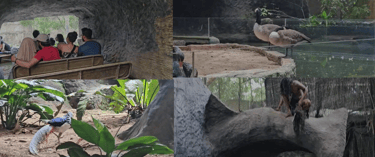
Water World Boat Ride
The “River Safari” is a 15 minutes fun boat‑ride through a curated river environment featuring ecosystems inspired by famous rivers of the world: e.g. Amazon, Ganges, etc., including local Kelaniya river settings. It’s also described as an aviary river safari, combining boat ride, bird life overhead, fish, and educational introductions.
Water World Shooting Gallery
There is a shooting gallery within the Water World where one can try an Air Gun with 5 shots for LKR 400. I tried first time ever in life and my first shot was bang on target, though I missed to hit the bull’s eye for rest four by few inches.

Dinner at Indian Kitchen- A Symphony of Spices in the Heart of Colombo
Stepping into Indian Kitchen is akin to crossing a fragrant threshold into the soul of India itself. In the vibrant heart of Colombo, this culinary sanctuary doesn’t merely serve food — it weaves an experience, rich in colour, aroma, and timeless tradition.
The ambiance is a poetic blend of Pondicherry’s colonial charm and India’s rustic soul — glowing lanterns, textured wood, artful pops of colour — a space where every corner feels kissed by heritage. There’s a gentle hum of conversation, clinking cutlery, and the soft scent of roasted cumin and saffron in the air. Time, somehow, feels slower here.
Then comes the food — and with it, a rhapsody of flavours that dance across your palate like a well-rehearsed classical raga. Since, I am a vegetarian, I ordered paneer dish and dal, and it was prepared with reverence, and had depth of flavour and balance. The paranthas, also leave your taste buds to long for more.
Service is warm, intuitive, and attentive without intrusion. If there is one truth that emerges from a meal here, it is this: Indian Kitchen doesn’t just cook — it tells stories.
I met Mr Vincent Renold, a lively person at heart, the Founder and Director of Indian Kitchen and Mr N Ragunathan, General Manager (Operations). We spoke to Mr Vinvent at length about his venture and also about the places we visited in Sri Lanka during our trips. He told us about Dambana and Vedda community, and promised to take us along during our next visit. He also offered to drop us to our Hotel, which we thanked him for and walked back. Hope to see him again.
Dinner at Taj Samundra
We also explored Taj Samudra Indian Dining experience, which was par our expectation. Food prepared with care and great taste, it was a good experience.
We have to still explore few key tourist places in Sri Lanka like Jaffna, , Trincomalee, visit to Vedda People (natives) in Dambana, visit to Ella and hiking on Adams Peak (If I could do). May be in my next visit, till then Ayubowan and “śrī laṁkāva hamuvemu” ("Let us meet Sri Lanka" ) soon for Part-3.