

You didn’t come this far to stop. Bring out your Opinion through Pen.
Article- The Structural Metamorphosis of Indian Education: RTE @ 2026
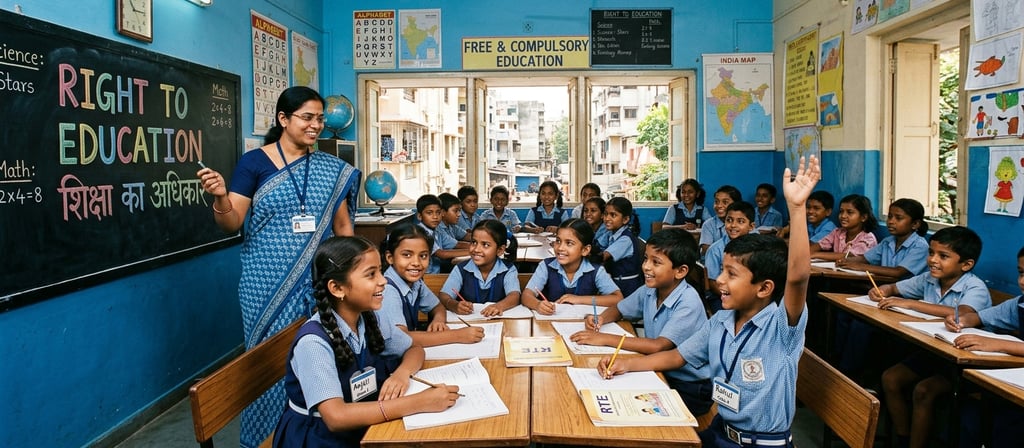
The late-afternoon sun filtered through the window, catching the dust motes dancing over a battered wooden desk. Around it sat Arjun, Satya, Khyati, and Saurav (original names replaced) their eyebrows furrowed over equations of linear variables. They were an unlikely mosaic; some came from high-end private academies, others from Government schools. Yet here, under the umbrella of India's historic Right to Education (RTE) Act, their minds met on equal ground.
As their teacher, watching them solve problems together sparked a profound curiosity as I looked at them. Their education was secured by the RTE’s landmark 25% quota for the Economically Weaker Section (EWS) in private schools and Central/ State run Schools. I wondered: How deeply has this law truly affected the fabric of our society over the years? What are its silent triumphs, its glaring blind spots, and most importantly where does it go from here?
Driven by these questions, I embarked on a deep dive into public archives, legal breakdowns, and predictive AI tools.
I wove these discoveries into a piece: "The Structural Metamorphosis of Indian Education: RTE @ 2026." Before you read it, step into the world behind the data through this short story.
The Equation of Equal Skies
In the heart of a bustling city, two lives unfolded just 2 KMs apart.
There was Suksham, whose father spent 12 hours a day steering an auto-rickshaw, dreaming of a life where his son didn't have to count loose change to survive. And there was Kabir, whose parents discussed corporate mergers over breakfast in a high-rise penthouse.
In an older India, these two boys would have walked parallel earth, their worlds never destined to touch.
But Section 12(1)(c) of the RTE Act mandated that prestigious private gateways open their doors to the children of the neighbourhood's weaker sections. On a crisp July morning, Suksham walked through those gates, his oversized tie slightly askew, sitting right next to Kabir.
Yet, watching my students, I saw the true magic of the ACT manifest as I watched them study in 2026, a sharp realization hit me. The law that brought them together was designed in 2009. A world before generative AI, advanced automation, and virtual learning ecosystems.
While Sakshum and Kabir were learning traditional fractions on paper, the global economy outside the window was shifting beneath their feet. If the RTE remained frozen in the past, it would trap these bright minds in an obsolete system. It was time for a metamorphosis.
What if the Right to Education became the Right to the Future?
How do we evolve this foundational law to guarantee not just a physical desk, but absolute digital sovereignty and AI-driven personalized learning for every single child in India?
Note: All names are fictitious.
For Reading the Article: The Structural Metamorphosis of Indian Education: RTE @ 2026, Click the Button Below:
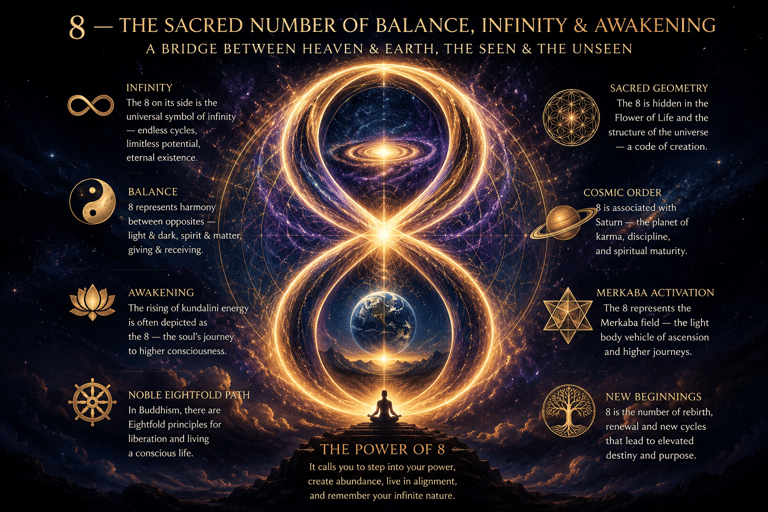
Article - ASHTA - 8 - ( अष्ट )- A Symbol of Cosmic Order and Spiritual Completeness
While listening to the chant
ॐ गं गणपतये नमः। - "I bow to Lord Ganesha and seek His blessings."
सिद्धि विनायक नमो नमः। - "Repeated salutations to Siddhi Vinayak, the giver of success and fulfillment."
अष्टविनायक नमो नमः। - "Repeated salutations to Ashtavinayak, the eight revered forms of Lord Ganesha."
गणपति बाप्पा मोरया। - "O revered Father Ganpati, we praise and adore You."
"Morya" is traditionally linked to the saint Morya Gosavi, a great devotee of Lord Ganesha.
I was inquisitive about “Ashtavinayaka” the eight revered forms of Ganesha. So I dived deep into the philosophy behind the word. I came to know that there are Eight Ashtavinayak Temples in Bharat, each has its significance in Hindu Dharma.
I was also curious about “Ashta (अष्ट-8)”, which is used as prefix in many Hindi and Sanskrit Words. Though, the list is very long but few key words starting with Ashta and having deep spiritual and cosmic context that I could explore were Ashta Dikpala (अष्टदिक्पाल), Ashta Prakriti (अष्ट प्रकृति), Ashta Lakshmi (अष्टलक्ष्मी), Ashta Vasus (अष्ट वसु), Ashta Siddhi (अष्ट सिद्धि), Ashtanga Yoga- (अष्टांग योग), Ashtakon (अष्टकोण), Ashtamangala- अष्टमंगल, AshtaDhatu (अष्टधातु), Ashta Nemi (अष्ट नेमि), Aṣhṭāhnika (अष्टान्हिका), Ashta Bhairava (अष्ट भैरव), Ashta Chhap (अष्टछाप), Ashta Nayika (अष्टनायिका), Ashta Matrika (अष्ट मातृका), Ashta Mahishi (अष्ट महिषी) (Ashtabharya), Ashtavakra Gita (अष्टावक्र गीता), Ashtadhyayi (अष्टाध्यायी),, Ashta Prahar (अष्ट प्रहर), Ashta Bhuja (अष्टभुजा), Ashtavaidya (अष्टवैद्य), Ashtami (अष्टमी), Ashtanga Pranam (अष्टांग प्रणाम), Eight Pointed Star (अष्टकोणीय तारा), Ashtakam (अष्टकम्), अष्टपदी (Aṣṭapadī / Ashtapadi), Ashtadal Padma (अष्टदल पद्म) and Ashta Chiranjivi (अष्टचिरंजीवी).
For reading the exploratory work – “ ASHTA ---- 8 ---- ( अष्ट )- A Symbol of Cosmic Order and Spiritual Completeness”, click the following link
AI- A Double Edged Sword
Artificial Intelligence (AI) is one of the most transformative technologies of the 21st century. It is being used to improve healthcare, education, scientific research, transportation, agriculture, and business productivity. However, AI can also be misused for misinformation, deep fakes, cybercrime, surveillance, and other harmful activities. As AI continues to advance rapidly, it has the potential to bring unprecedented prosperity, innovation, and solutions to many global challenges.
At the same time, AI may significantly affect employment by automating many routine and even skilled jobs, leading to economic disruption and social inequality if not managed properly. Governments should invest in AI education, worker reskilling, strong regulations, and social protection measures to ensure that all citizens share the benefits of AI. Individuals should continuously upgrade their skills, learn to work alongside AI, and use it responsibly. The future of humanity will depend not only on how powerful AI becomes, but also on how wisely societies govern and utilize it.
Since, I was inquisitive and a bit sceptical on the positives and negatives of AI, I thought why not ask AI tools FIVE Key questions related to my scepticism on the issue related to AI development, its uses and abuses, its future, impact on humanity especially unemployment and what Governments and citizens must do for protection from negative impact of AI.
The Five Questions I asked the AI Tools ChatGPT and GEMINI are:
Question-1: What happens to humanity if AI in next few years is able to do almost all the work being done by human beings?
Question-2: How long it may take AI to reach such point?
Question-3: Which specific career fields are expected to see the fastest AI automation over the next 5 years, and which are the safest?
Question-4- What are various countries doing to prevent their citizens from getting impacted by such fast AI development?
Question-5: What do you recommend for the Governments to save their citizens from negative impact of AI?
For reading the response from AI, click the following button